Bosong Zhang

Forcing and Feedback • Radiative Feedbacks

Geophysical Research Letters (2023)

The Dependence of Climate Sensitivity on the Meridional Distribution of Radiative Forcing

Coupled experiments show that climate sensitivity depends strongly on forcing latitude because regional forcing patterns reorganize clouds, inversion strength, and ocean heat uptake.
DOI: 10.1029/2023GL105492 Meridional Forcing Patterns Pattern-Dependent Sensitivity Coupled Model Diagnostics
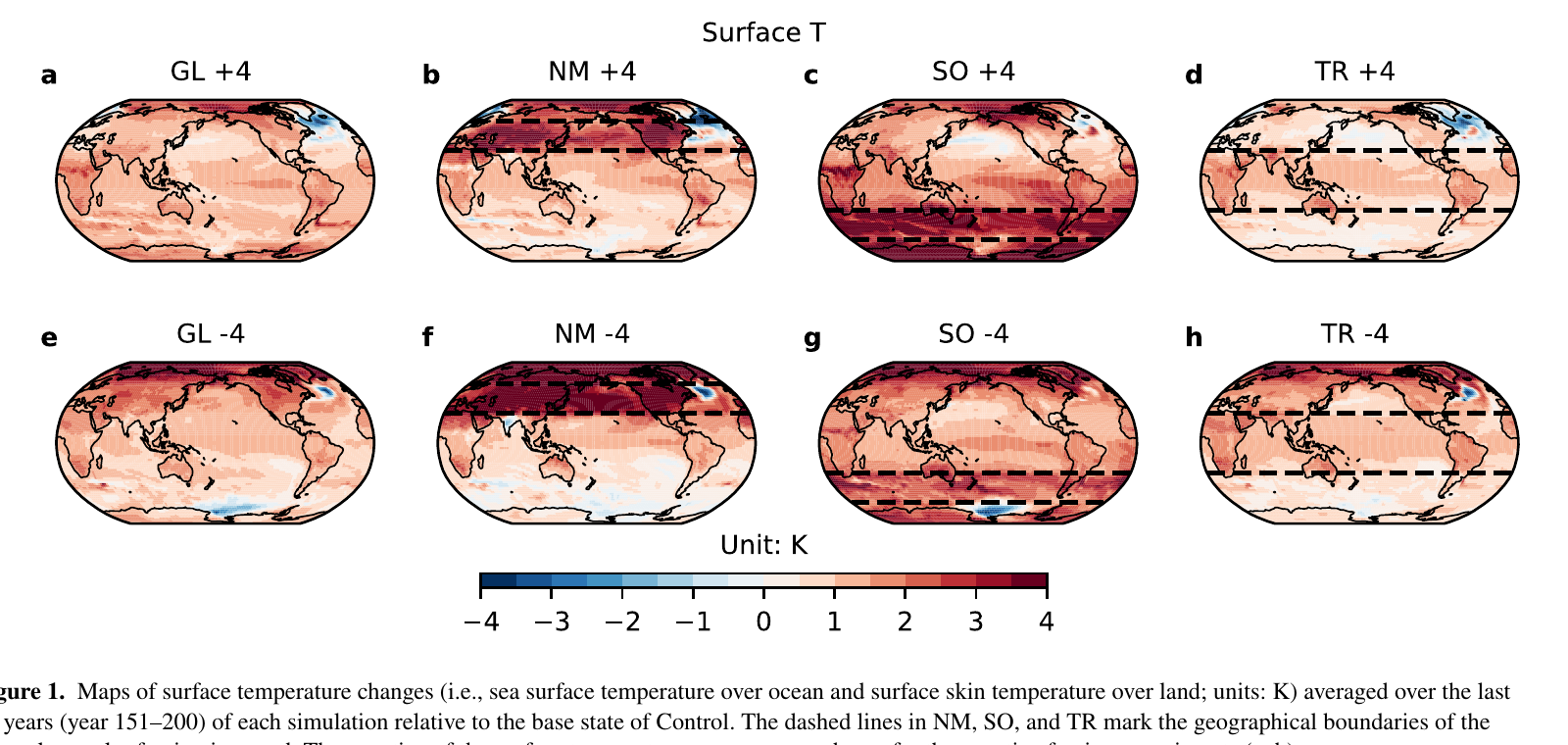
Figure 1 from Zhang et al. 2023 showing meridional forcing experiments and surface temperature response
Figure 1 from the paper: surface temperature responses across imposed meridional forcing bands.

Latitude-Sensitive Response

Climate sensitivity depends strongly on where radiative forcing is imposed.

Feedback Structure Shift

Regional forcing patterns produce distinct global feedback and temperature responses.

Process-Level Constraint

Meridional forcing experiments clarify pathways behind sensitivity spread.

Paper Citation

Zhang, B., M. Zhao, H. He, B. J. Soden, Z. Tan, B. Xiang, and C. Wang, 2023: The Dependence of Climate Sensitivity on the Meridional Distribution of Radiative Forcing. Geophysical Research Letters, 50, e2023GL105492. https://doi.org/10.1029/2023GL105492

Scientific Logic

  • Question: How does effective climate sensitivity depend on where radiative forcing is applied meridionally?
  • Method: Coupled model sensitivity experiments with imposed forcing patterns over the tropics, Southern Ocean, midlatitudes, and globally.
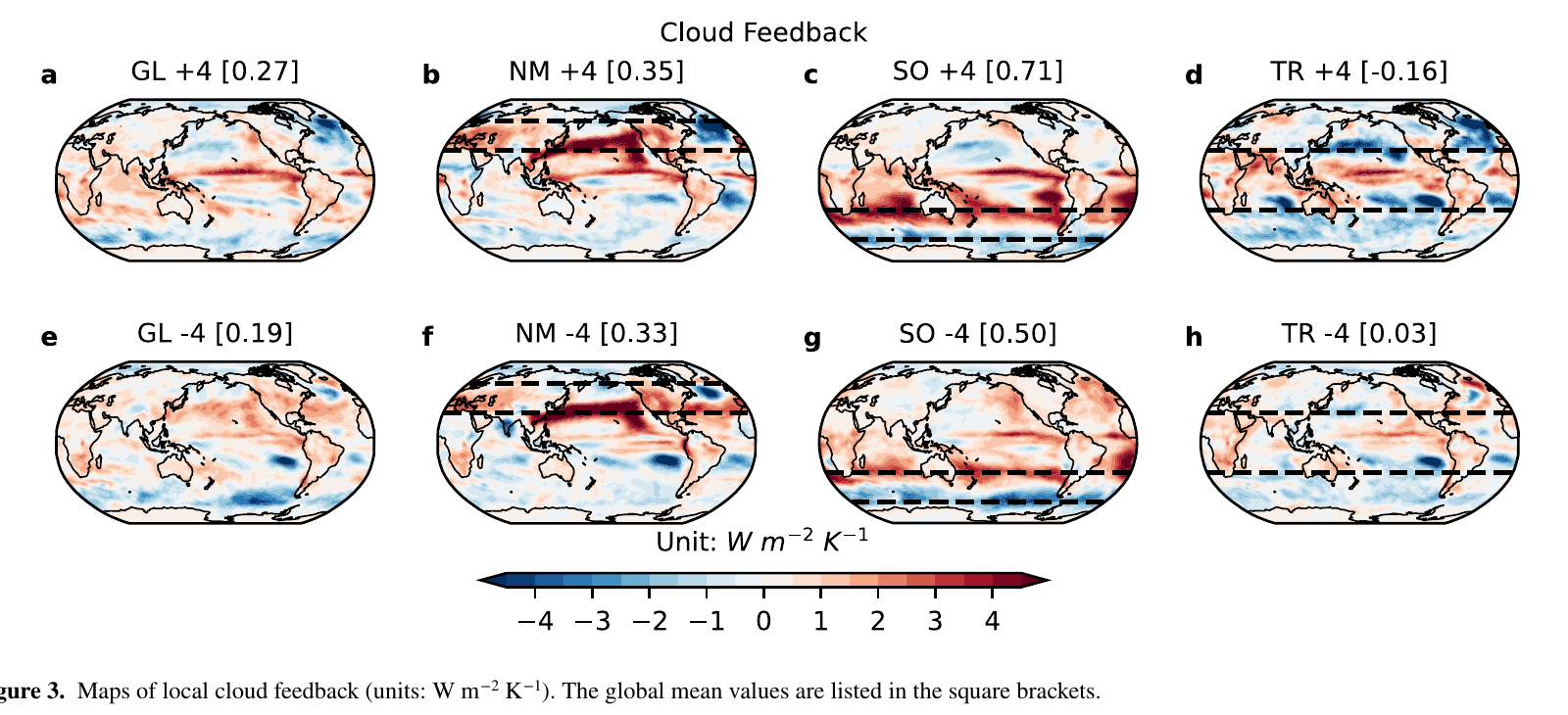
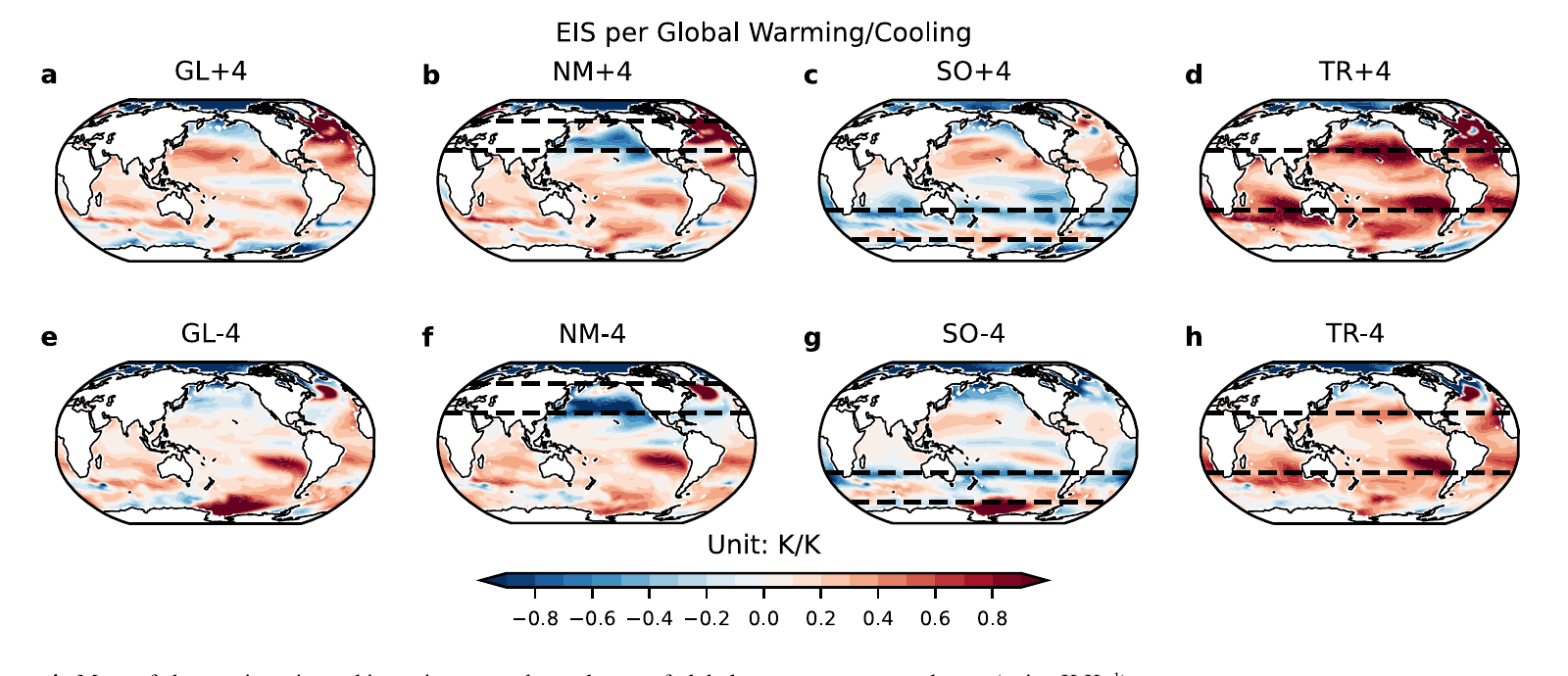
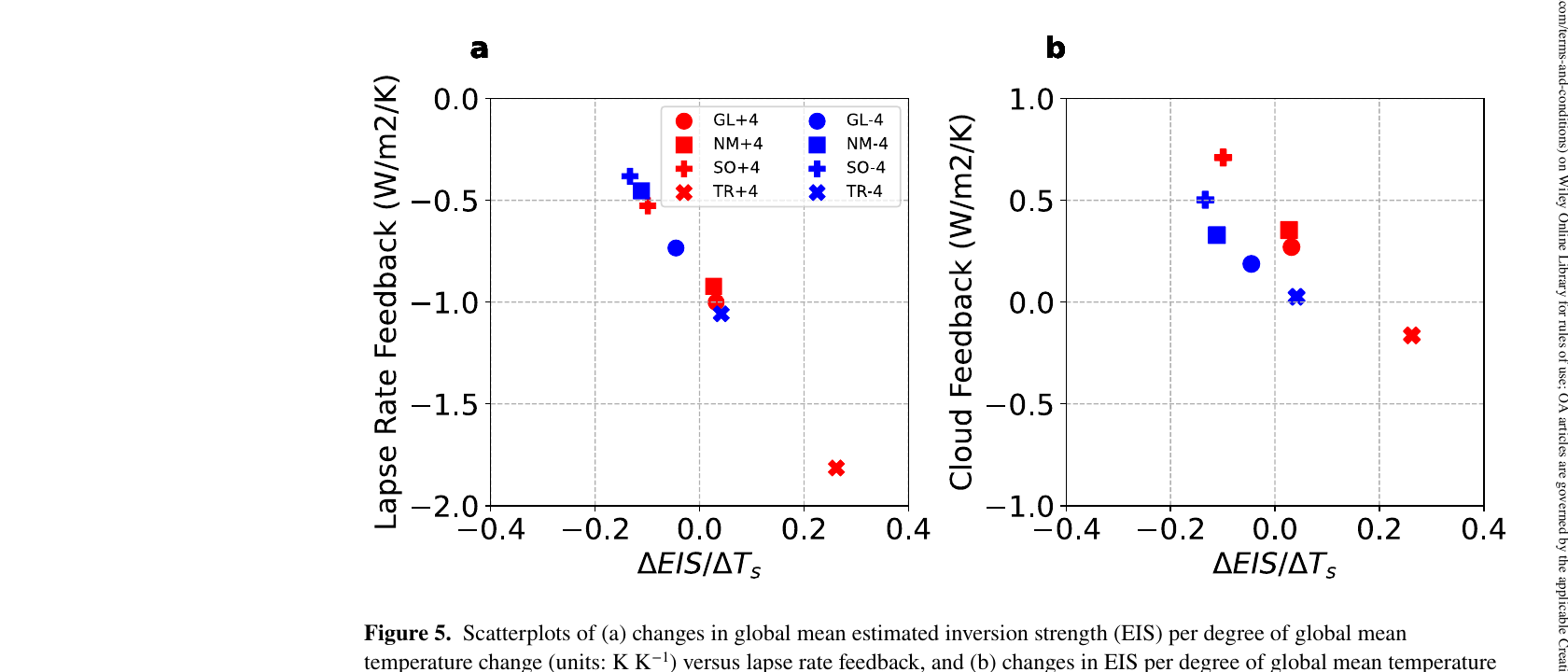
  • Mechanism: Forcing location changes cloud and lapse-rate feedback structure and ocean heat uptake, especially via inversion and low-cloud responses.
  • Main Findings: Sensitivity differs strongly by forcing latitude; Southern Ocean forcing yields substantially larger global temperature response than tropical forcing.

Scientific Question

How does the meridional location of radiative forcing alter global temperature response and inferred climate sensitivity in a coupled atmosphere-ocean model?

Experimental Design

  • Regionally targeted positive and negative solar-forcing perturbations.
  • Comparison of equilibrium-like temperature and feedback responses across forcing bands.
  • Diagnostics of pattern-dependent feedback contributions to global sensitivity.

Key Findings

  • Southern Ocean forcing produces much larger global warming response than tropical forcing for comparable imposed perturbations.
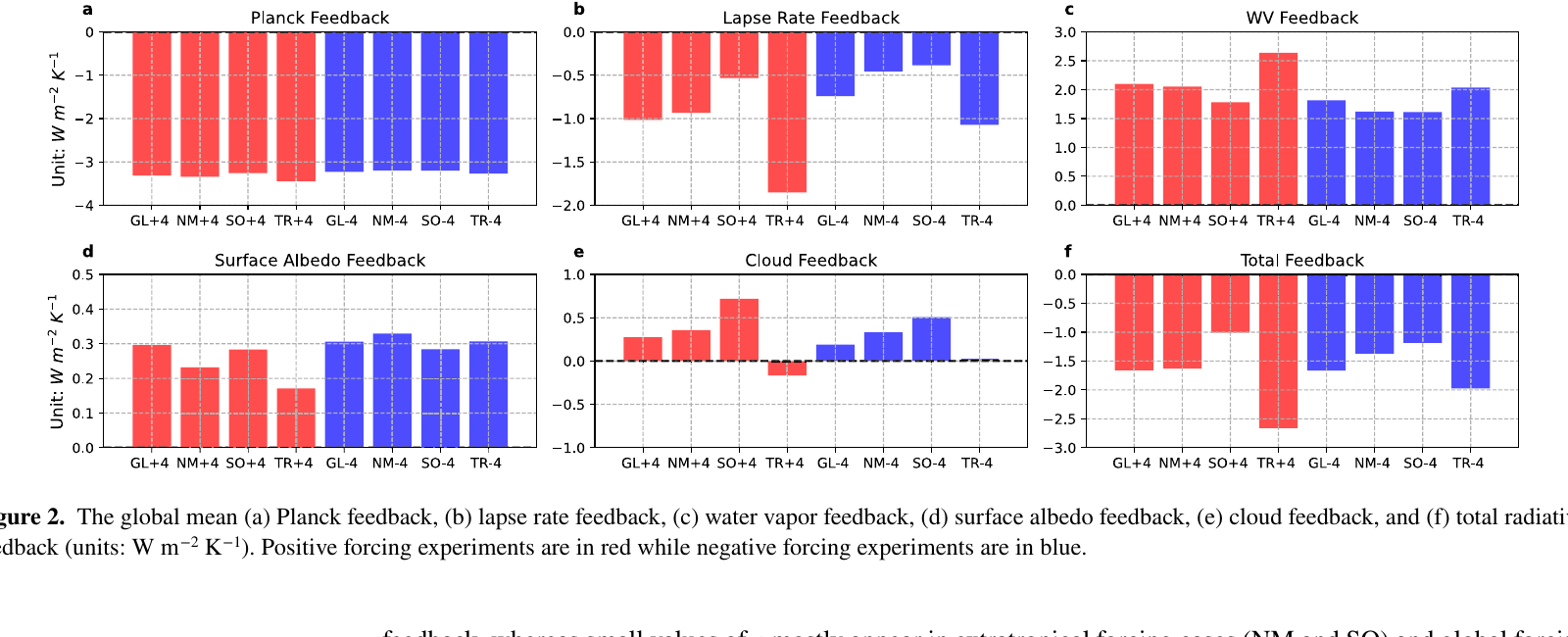
  • Low-cloud and inversion-mediated feedbacks are strongly pattern dependent and drive much of the efficacy contrast.
  • Meridional forcing structure is a first-order control on inferred global sensitivity.

Figures from the Study

From Zhang et al. (2023), https://doi.org/10.1029/2023GL105492.