Bosong Zhang

Forcing and Feedback • Radiative Feedbacks

Journal of Climate (2026)

Decoupling Land Surface Effects from CO2 Effective Radiative Forcing in a Climate Model

A controlled 4xCO2 framework isolates how land-temperature and soil-moisture adjustments alter fixed-SST ERF estimates via rapid land-atmosphere feedback pathways.
DOI: 10.1175/JCLI-D-25-0231.1 AM4 Experiments Land-Atmosphere Coupling ERF Decomposition
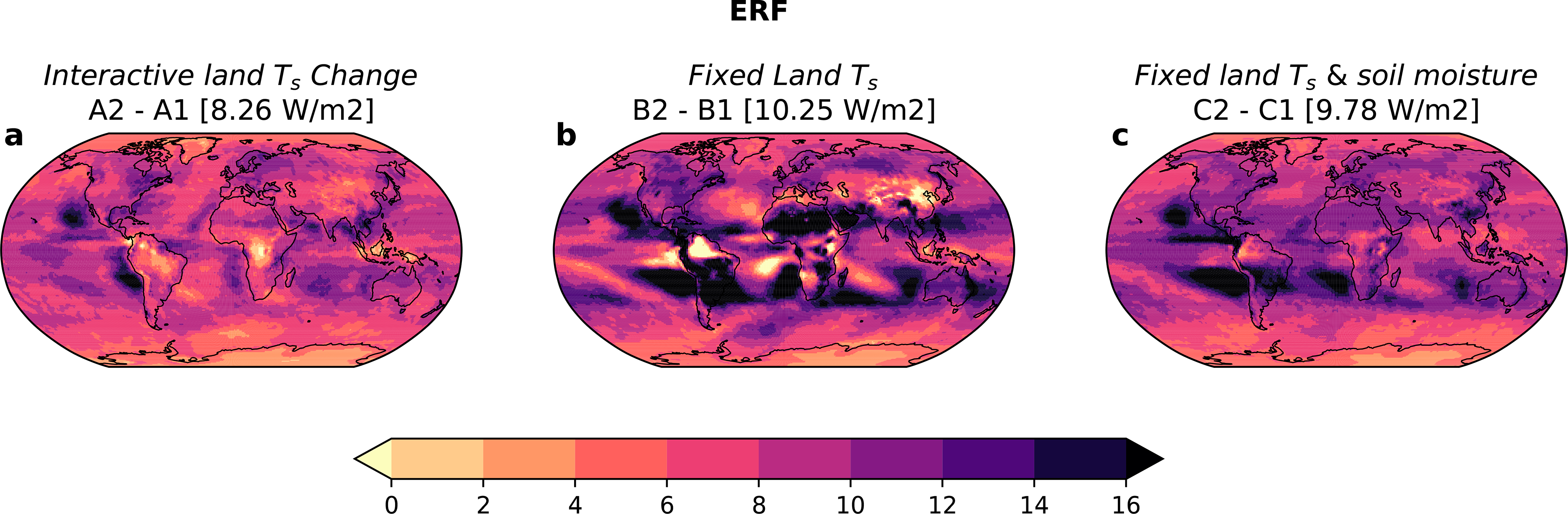
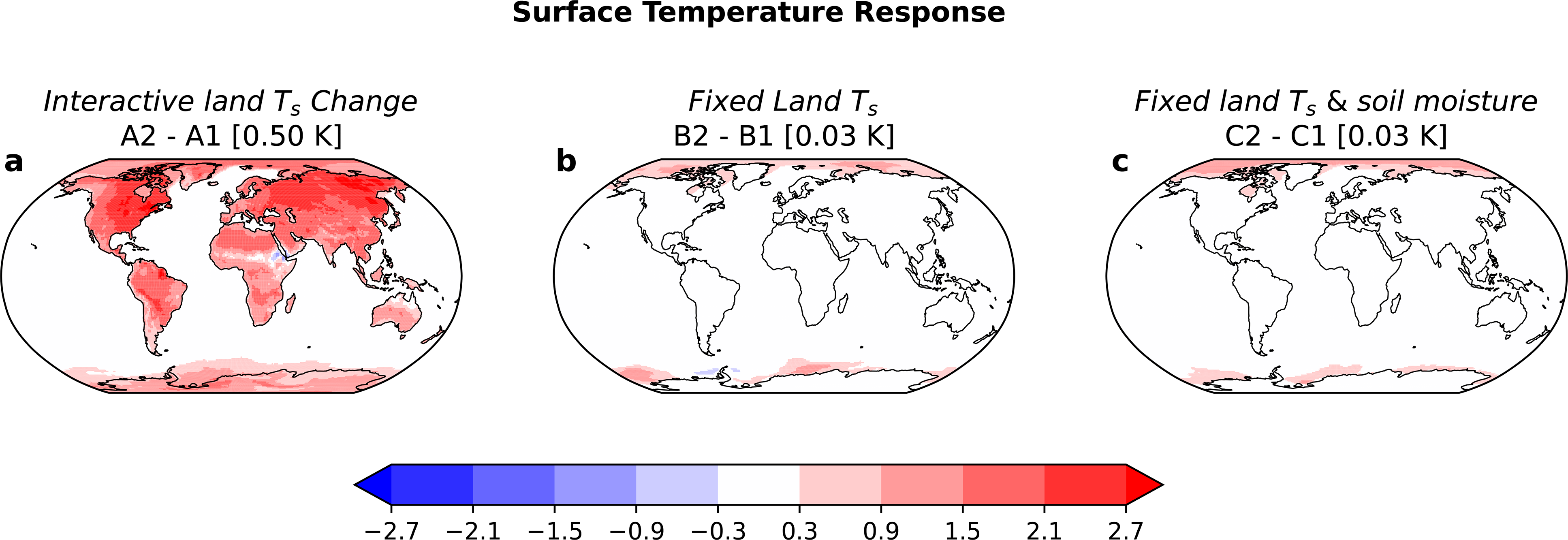
Figure 1 from Zhang et al. 2026 showing surface temperature change across experiment configurations
Figure 1: surface temperature response for experiment pairs with interactive vs prescribed land conditions.

ERF Shift: 8.26 → 9.78 W m-2

Fixing land temperature and soil moisture increases estimated 4xCO2 ERF.

Land Controls Matter

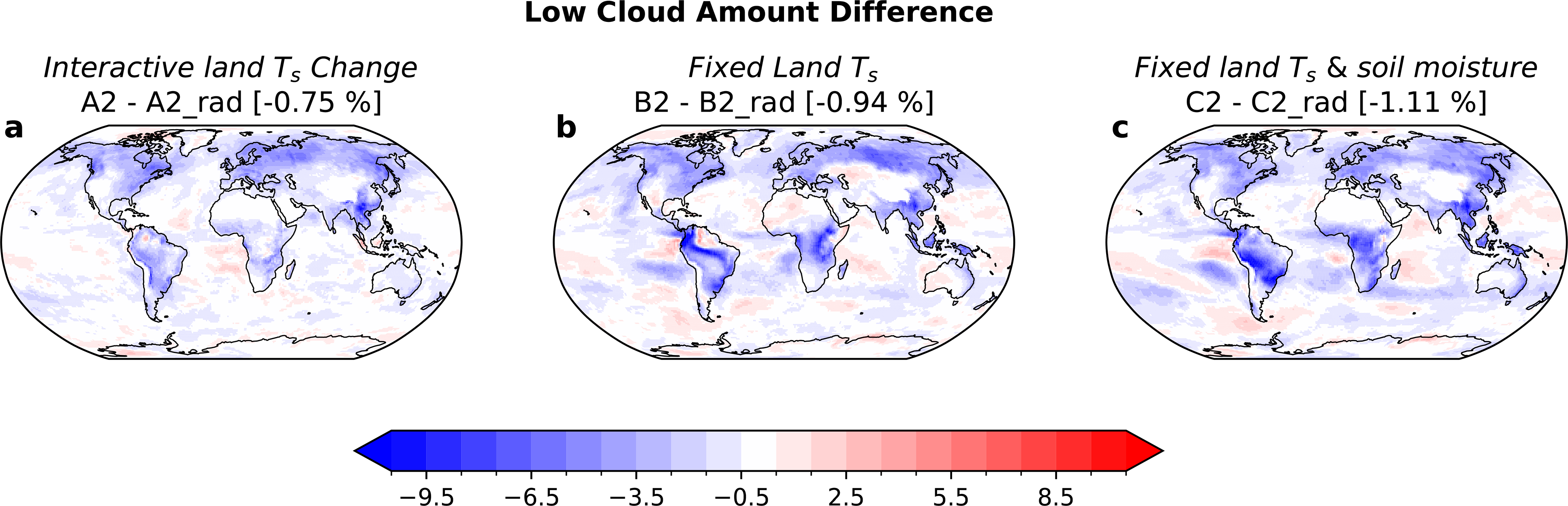
Prescribed land state suppresses longwave cooling and alters cloud adjustments.

Hydrology Response Diverges

ERF decreases with stronger land warming, while land precipitation can increase.

Paper Citation

Zhang, B., B. J. Soden, H. He, and R. J. Kramer, 2026: Decoupling Land Surface Effects from CO2 Effective Radiative Forcing in a Climate Model. Journal of Climate, 39, 65-80. https://doi.org/10.1175/JCLI-D-25-0231.1

Scientific Logic

  • Question: How much do land-temperature and soil-moisture adjustments contaminate fixed-SST estimates of CO2 effective radiative forcing (ERF)?
  • Method: Abrupt 4xCO2 fixed-SST experiments with interactive versus prescribed land temperature and soil moisture in a state-of-the-art climate model.
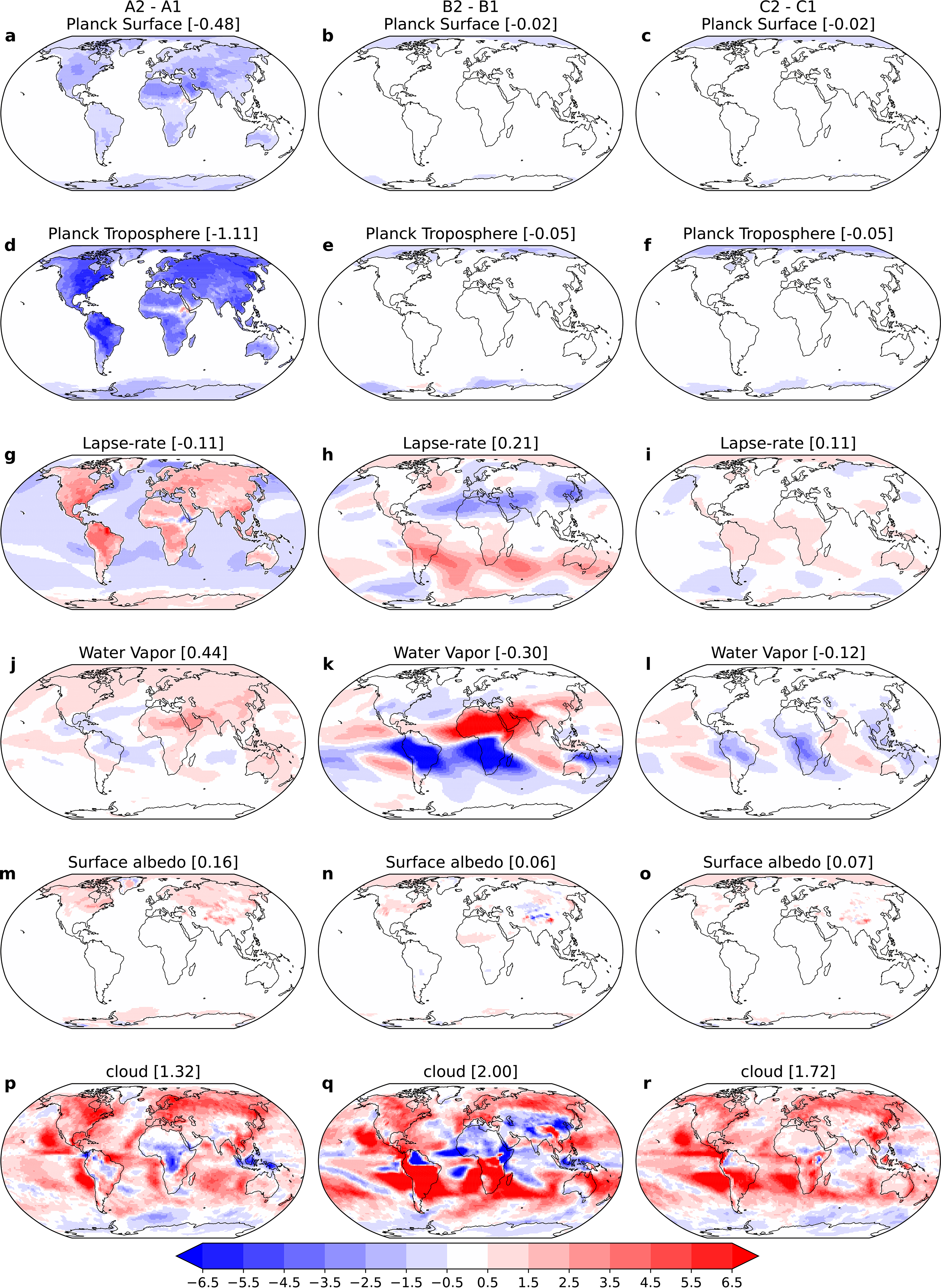
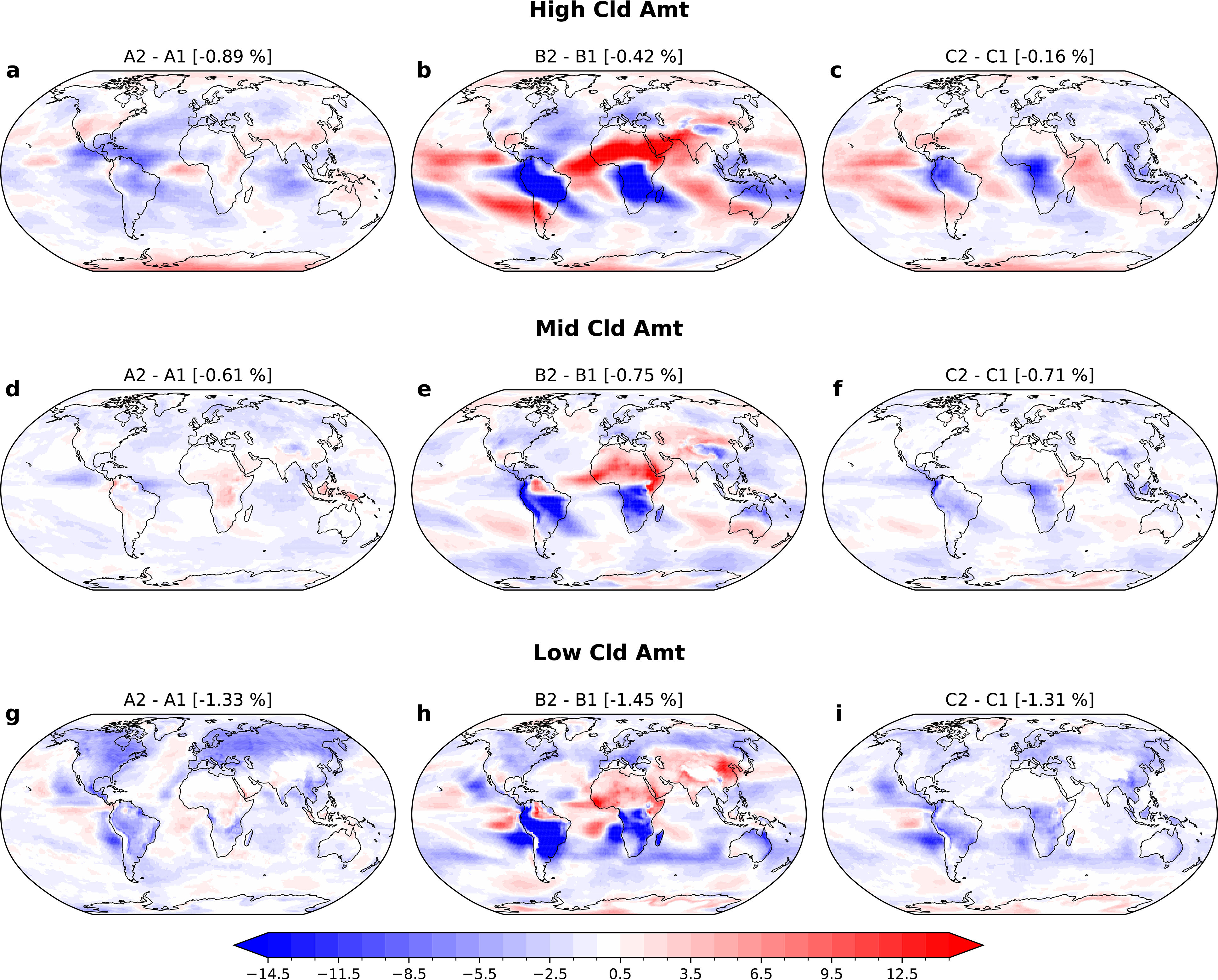
  • Mechanism: Land warming/drying modifies rapid cloud, humidity, and circulation adjustments, feeding back on top-of-atmosphere energy imbalance diagnosed as ERF.
  • Main Findings: Constraining land states materially changes inferred ERF components, showing that land-induced rapid adjustments must be separated for cleaner forcing attribution.

Scientific Question

How much of fixed-SST 4xCO2 effective radiative forcing reflects true atmospheric adjustment versus land surface responses that emerge when land temperature and soil moisture are interactive?

Experimental Design

  • AM4 1xCO2 and 4xCO2 pairs with fixed SST boundary conditions.
  • Land temperature and soil moisture toggled between interactive and prescribed states.
  • Additional stomatal-response and land-warming-amplitude experiments for process attribution.

Key Findings

  • Allowing interactive land states changes diagnosed ERF relative to prescribed-land experiments.
  • Land thermal and hydrologic adjustments modify rapid cloud and humidity responses that project onto TOA imbalance.
  • ERF attribution is cleaner when land-induced rapid adjustments are explicitly separated.

Figures from the Study

Extracted directly from Zhang et al. (2026), Journal of Climate, https://doi.org/10.1175/JCLI-D-25-0231.1.