Bosong Zhang

Forcing and Feedback • Radiative Feedbacks

Journal of Advances in Modeling Earth Systems (2024)

The Green's Function Model Intercomparison Project (GFMIP) Protocol

The GFMIP protocol standardizes regional SST-perturbation experiments to build comparable Green’s functions and quantify pattern-effect feedback contributions across models.
DOI: 10.1029/2023MS003700 GFMIP Protocol SST Patch Experiments Pattern Effect Diagnostics
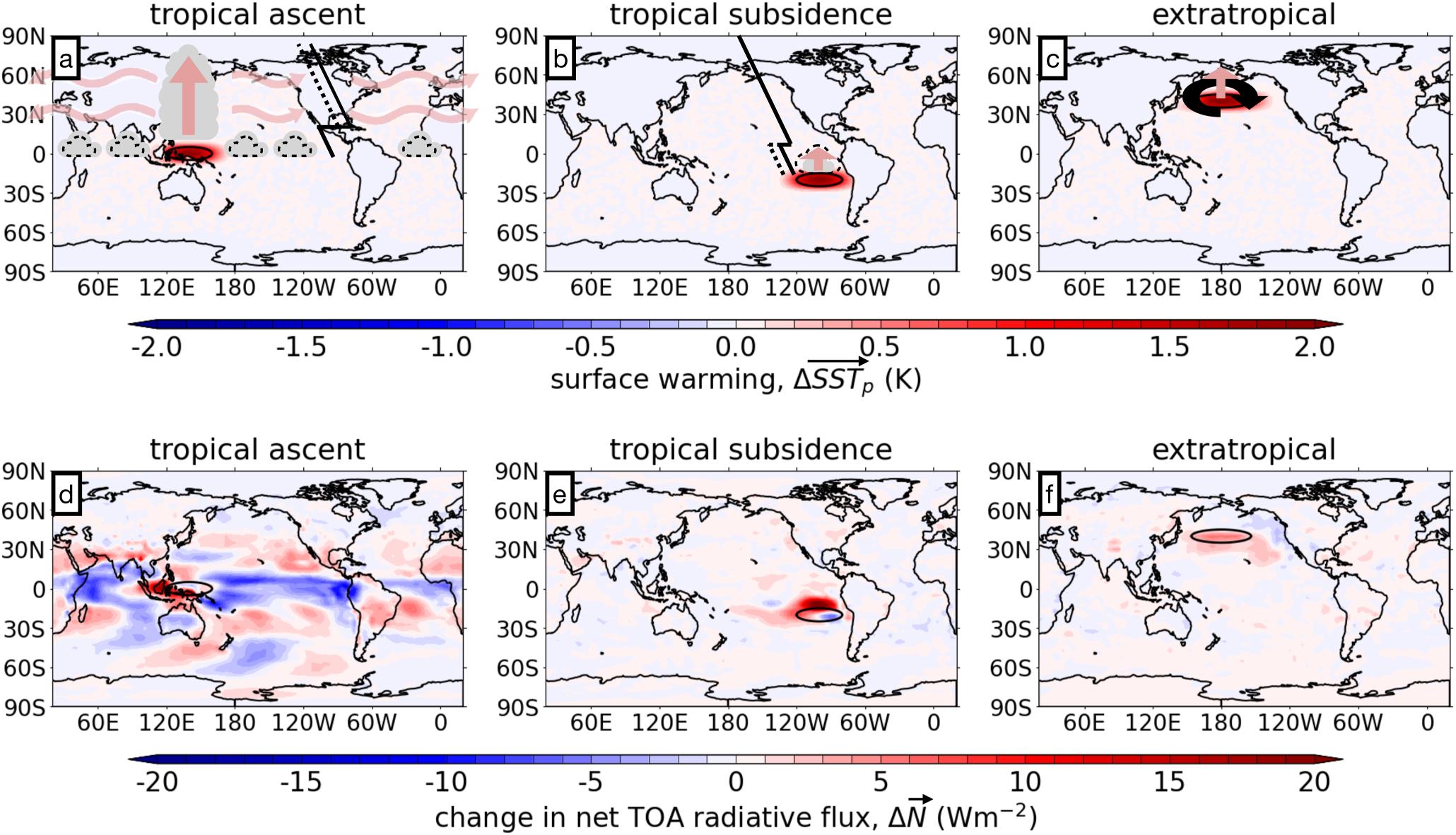
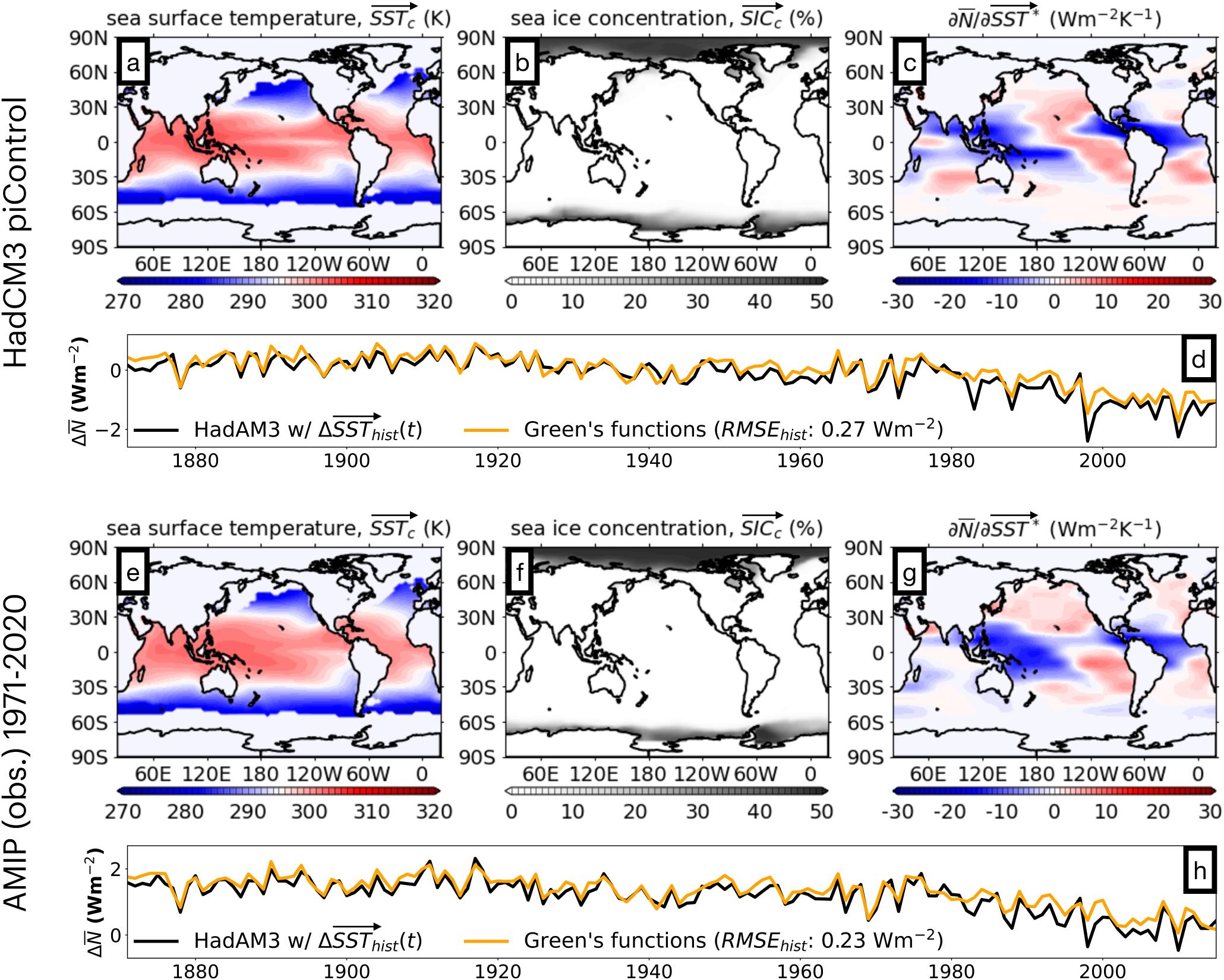
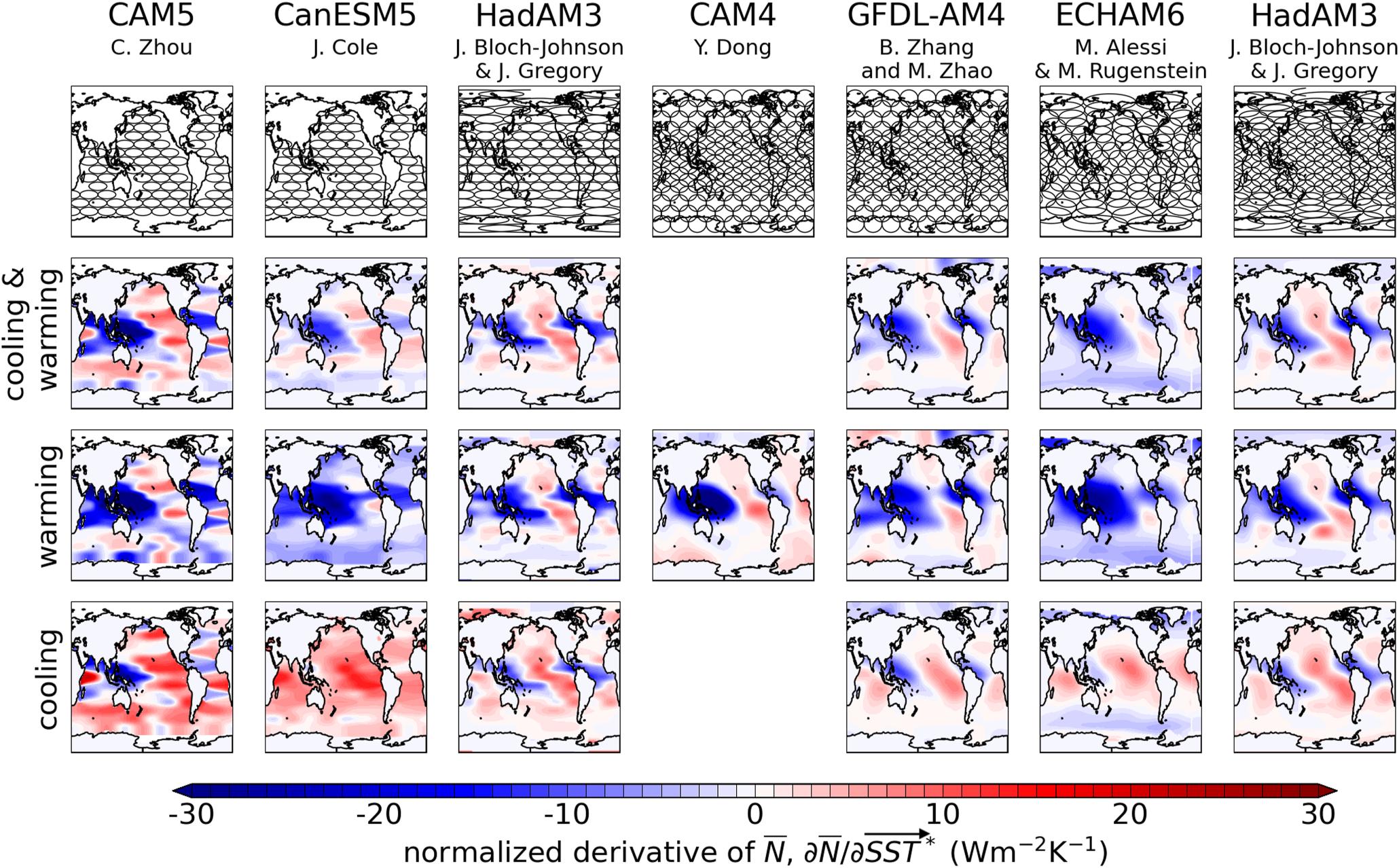
Figure 1 from Bloch-Johnson et al. 2024 showing Green's function model intercomparison workflow
Figure 1: GFMIP framework and reconstruction pathway used to estimate responses to arbitrary SST patterns from patch perturbation experiments.

Protocol Standardization

Defines shared experiment setup for cross-model Green's function diagnostics.

Nonlinearity Identified

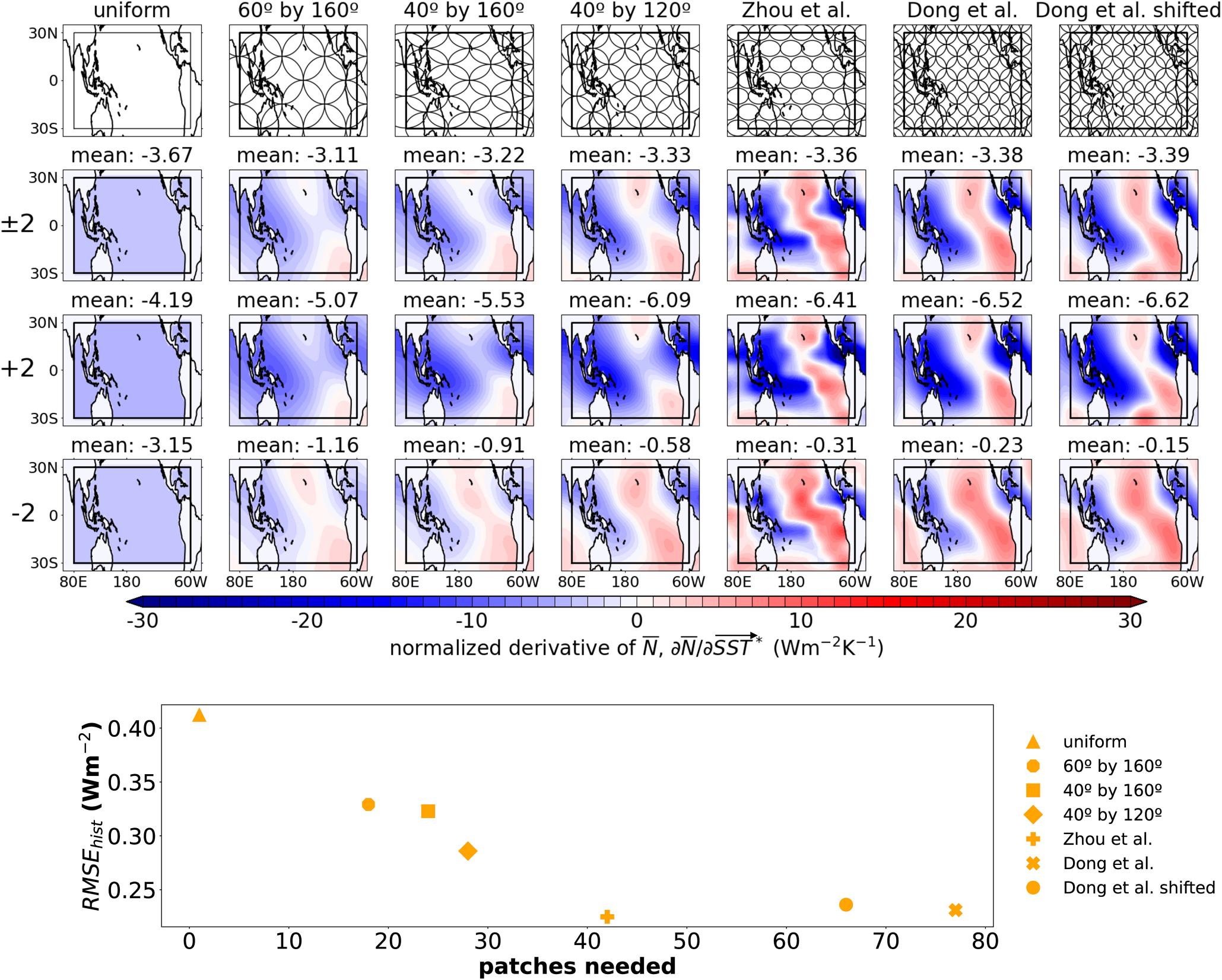
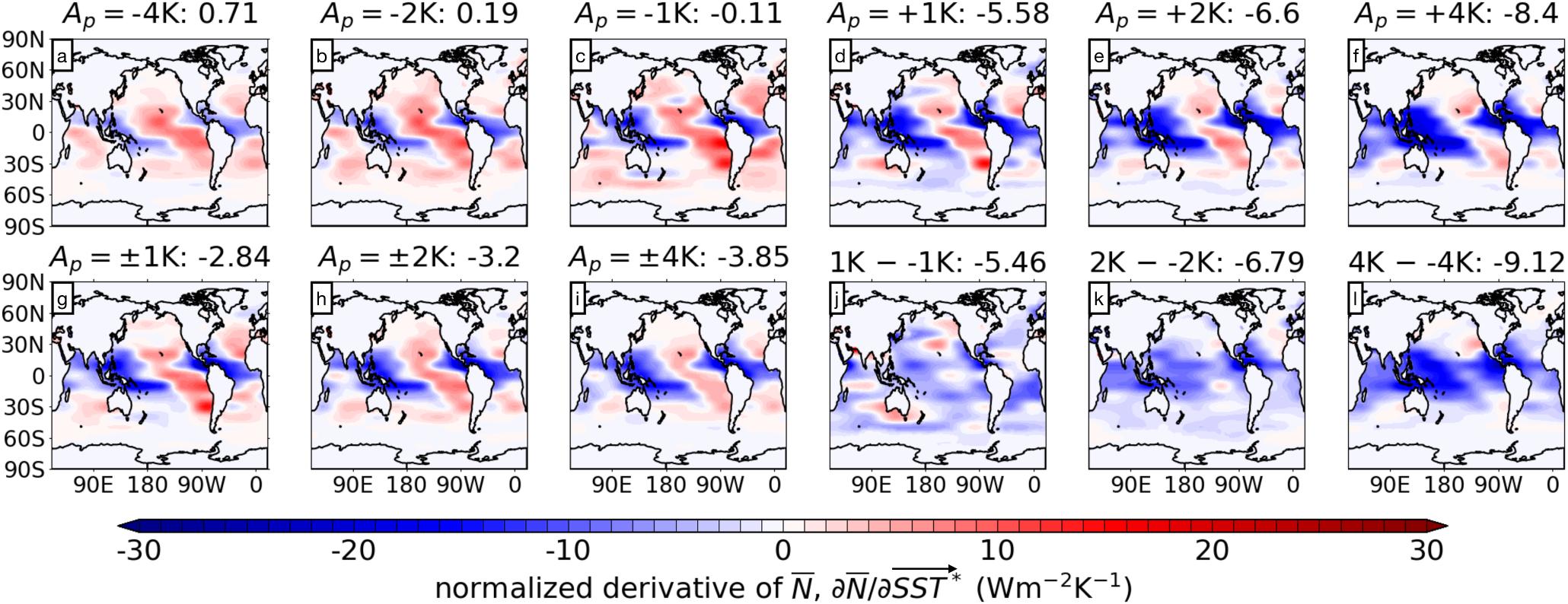
Warming-cooling asymmetry and patch-size dependence are first-order design considerations.

Practical Guidance

HadAM3 tests support a tractable compromise around perturbation amplitude and run duration.

Paper Citation

Bloch-Johnson, J., M. A. A. Rugenstein, M. J. Alessi, C. Proistosescu, M. Zhao, B. Zhang, et al., 2024: The Green's Function Model Intercomparison Project (GFMIP) Protocol. Journal of Advances in Modeling Earth Systems, 16, e2023MS003700. https://doi.org/10.1029/2023MS003700

Scientific Logic

  • Question: How can atmospheric Green’s-function (GF) experiments be standardized for robust intercomparison of pattern-effect diagnostics?
  • Method: A protocol based on localized SST perturbation experiments and shared diagnostics to construct comparable GF operators across models.
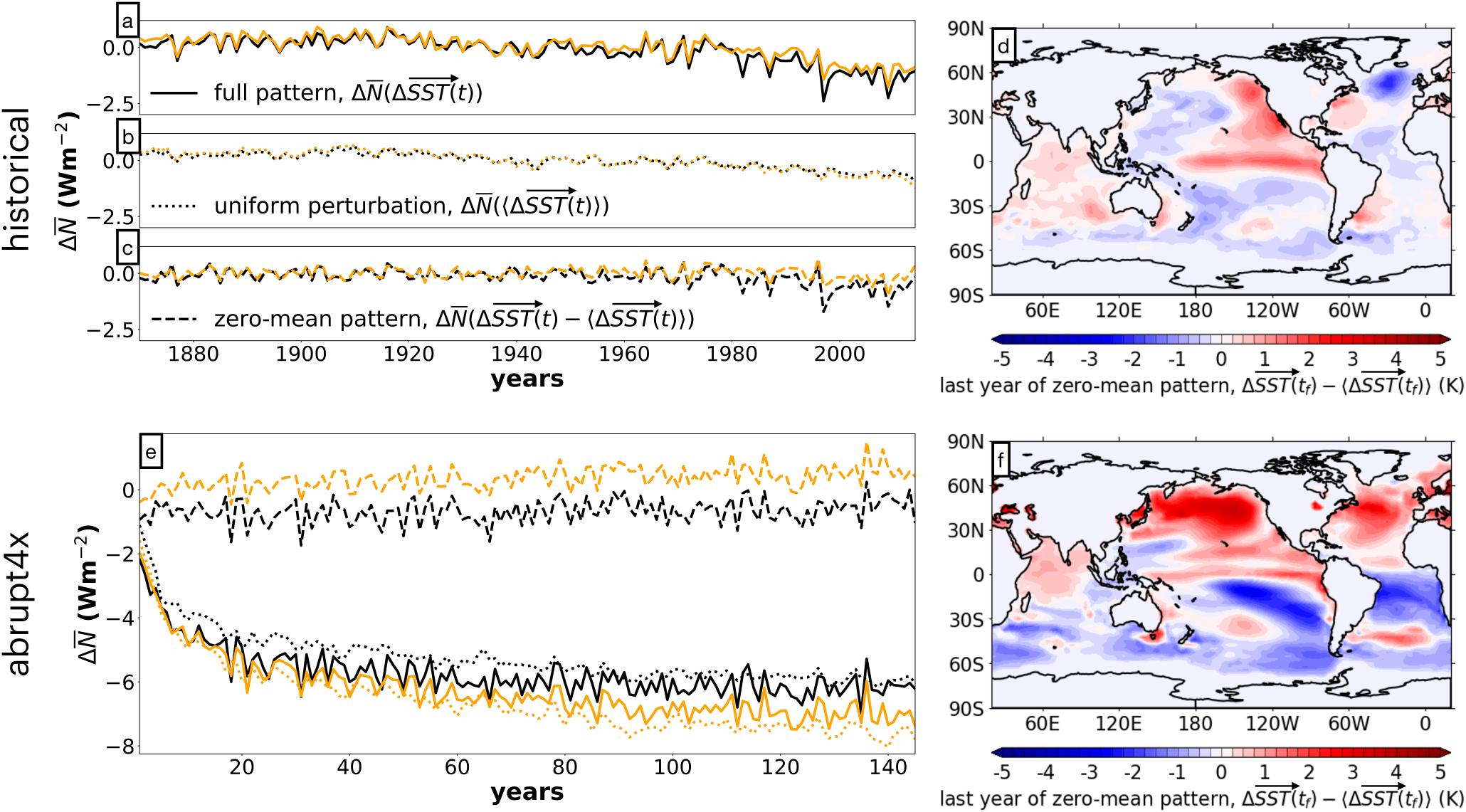
  • Mechanism: Linear superposition of regional SST responses decomposes global radiative-feedback changes into physically interpretable regional contributions.
  • Main Findings: The protocol establishes reproducible GF construction and benchmarking, while clarifying where nonlinear behavior limits linear reconstruction skill.

Scientific Goal

Establish a consistent model intercomparison protocol for atmospheric Green's functions to diagnose the climate response to observed and idealized SST patterns.

Protocol Design

  • Apply localized SST patch perturbations over climatological AMIP boundary conditions.
  • Construct response kernels and reconstruct arbitrary SST-pattern responses by superposition.
  • Quantify sensitivity to perturbation sign, perturbation magnitude, patch scale, and run duration.

Key Findings

  • A unified experiment design enables reproducible GF construction and direct intermodel comparison.
  • GF decomposition attributes global feedback changes to regional SST anomalies with transparent physical interpretation.
  • Linear reconstruction skill is high at broad scales but exposes important nonlinear limits in key tropical regimes.

Figures from the Study

Extracted directly from Bloch-Johnson et al. (2024), JAMES, https://doi.org/10.1029/2023MS003700.