Bosong Zhang

Forcing and Feedback • Radiative Feedbacks

Geophysical Research Letters (2025)

The Sea Surface Temperature Pattern Effect on Outgoing Longwave Radiation

AM4 experiments show that SST-gradient changes reorganize deep convection area, driving OLR changes through high-cloud and humidity adjustments linked to aggregation.
OLR Pattern Effect Convective Aggregation AM4 + CMIP6 DOI: 10.1029/2024GL112756
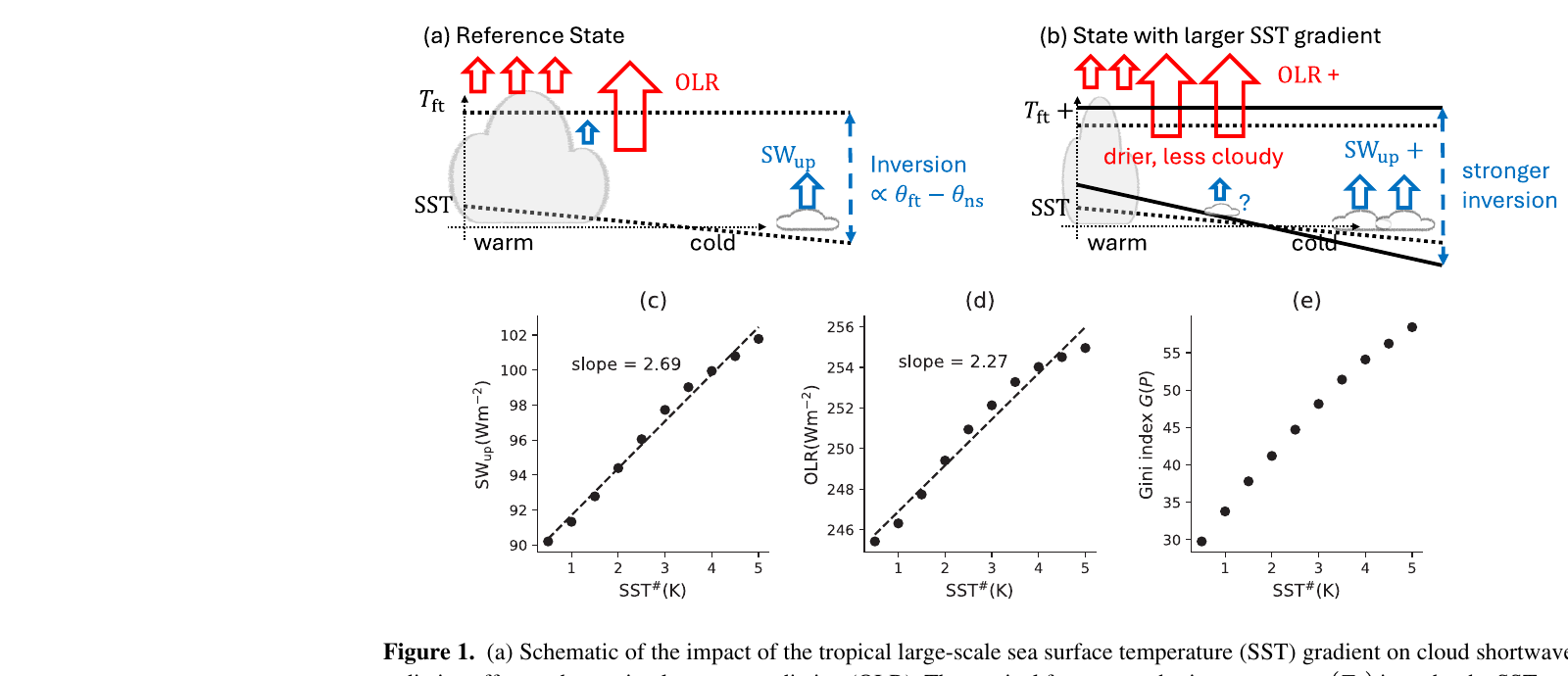
Figure 1 schematic of how tropical SST gradient modulates OLR and cloud-radiative responses
Figure 1 from the paper: schematic and idealized diagnostics linking tropical SST gradient, convective aggregation, and radiative response.

OLR Is Pattern-Sensitive

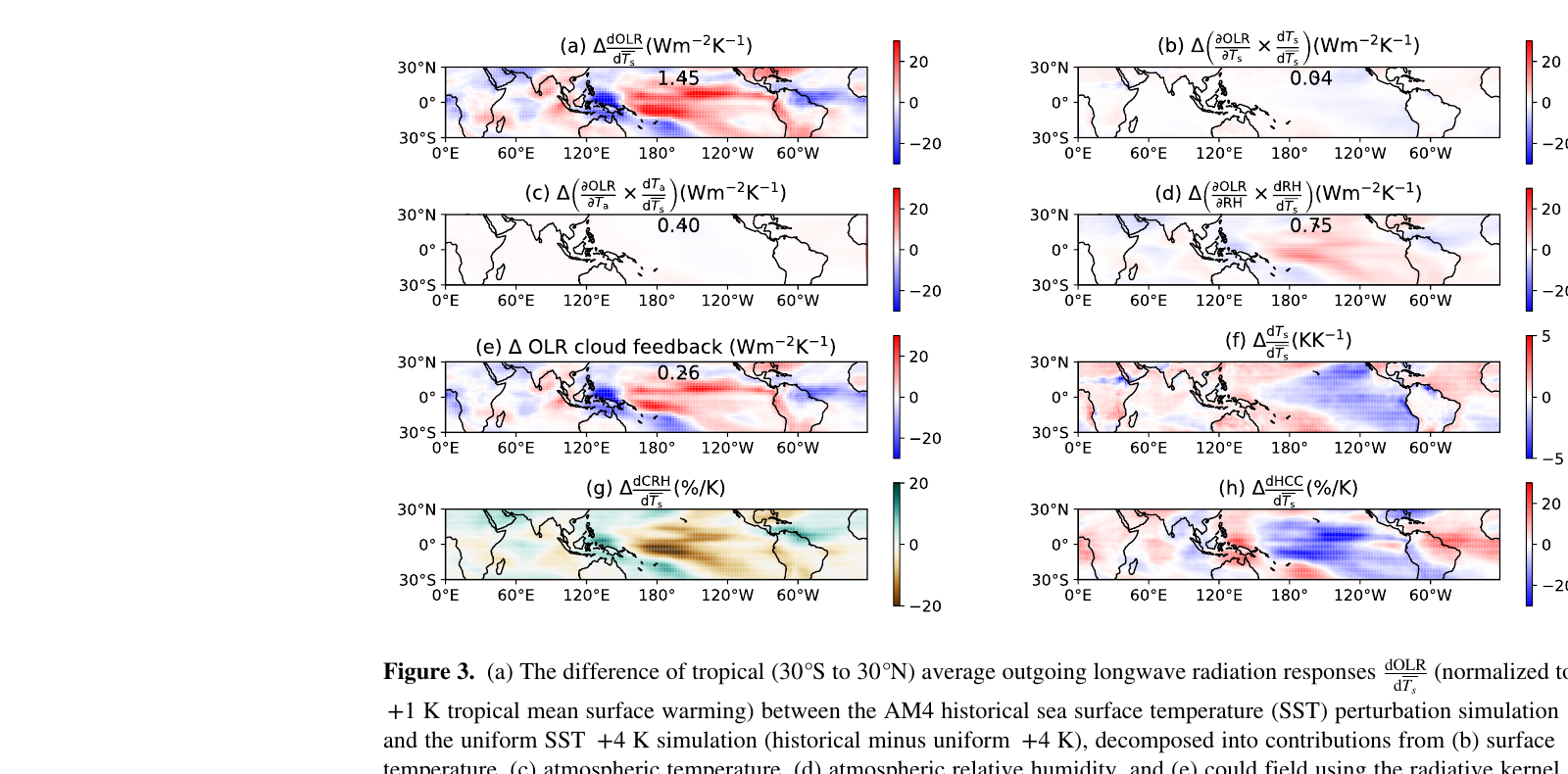
Tropical SST gradients modulate outgoing longwave radiation through changes in convective area and free-tropospheric humidity.

Comparable SW & LW Effects

The longwave contribution can be comparable to shortwave cloud feedback in targeted AM4 experiments.

Large Intermodel Spread

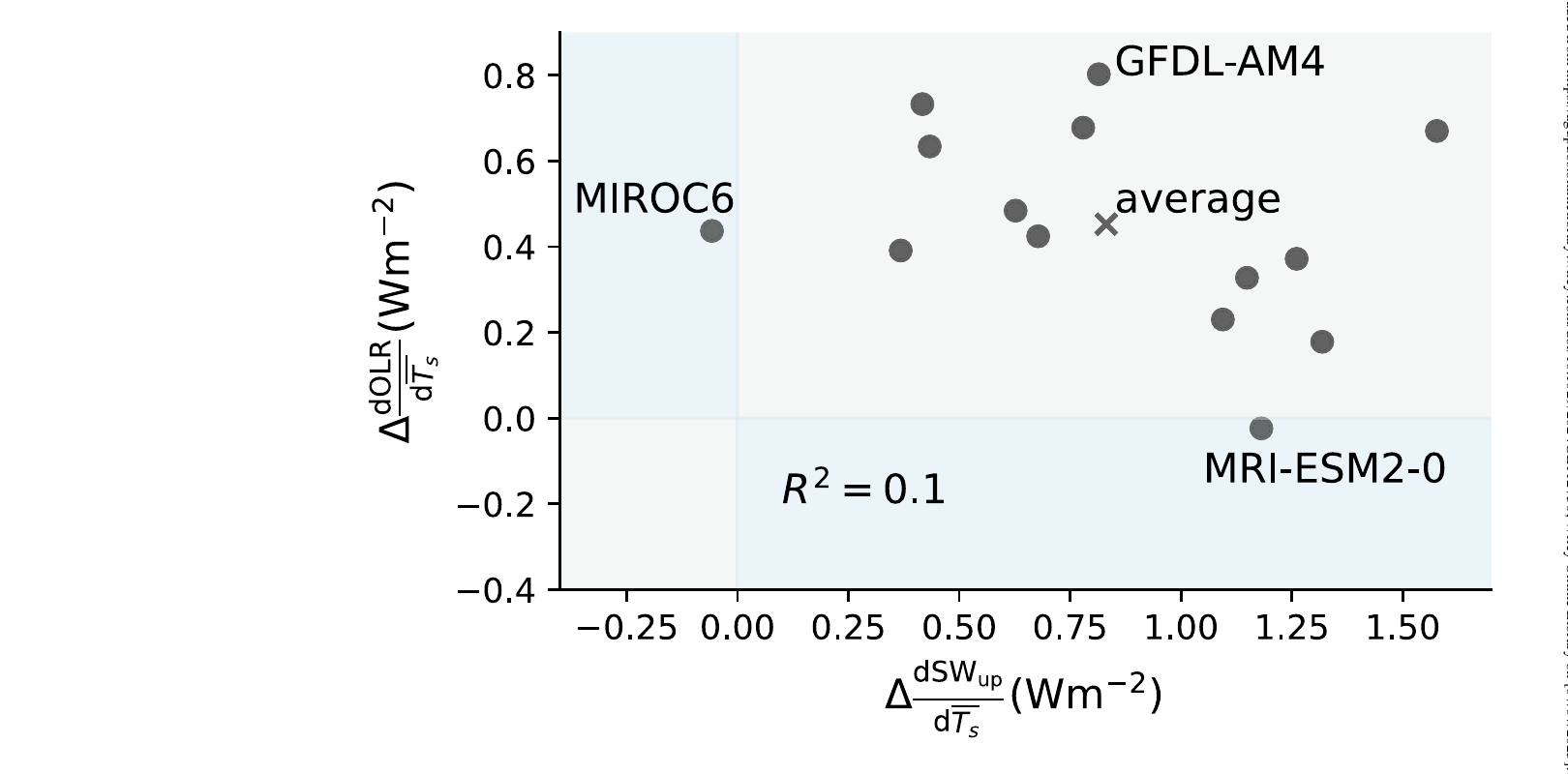
CMIP6 models show substantial spread in the shortwave-versus-longwave partitioning of pattern-effect feedback.

Paper Citation

Quan, H., B. Zhang, C. Wang, and S. Fueglistaler, 2025: The Sea Surface Temperature Pattern Effect on Outgoing Longwave Radiation: The Role of Large-Scale Convective Aggregation. Geophysical Research Letters, 52, e2024GL112756. https://doi.org/10.1029/2024GL112756

Scientific Logic

  • Question: How does tropical Pacific SST-gradient change affect outgoing longwave radiation (OLR) through convective organization?
  • Method: Targeted AM4 amip-piForcing-style experiments perturbing SST gradients between warm-pool and cooler tropical regions.
  • Mechanism: A stronger gradient contracts deep-convection area, reducing high-cloud coverage and humidity in convective outflow regions, which raises OLR.
  • Main Findings: Longwave adjustments linked to convective aggregation are a major component of pattern effect and can offset shortwave cloud-radiative responses.

Scientific Question

How do tropical SST gradient changes alter outgoing longwave radiation, and what fraction of the pattern effect is mediated by large-scale convective aggregation?

Methods

  • Targeted AM4 amip-piForcing-style experiments with idealized and historical SST pattern perturbations.
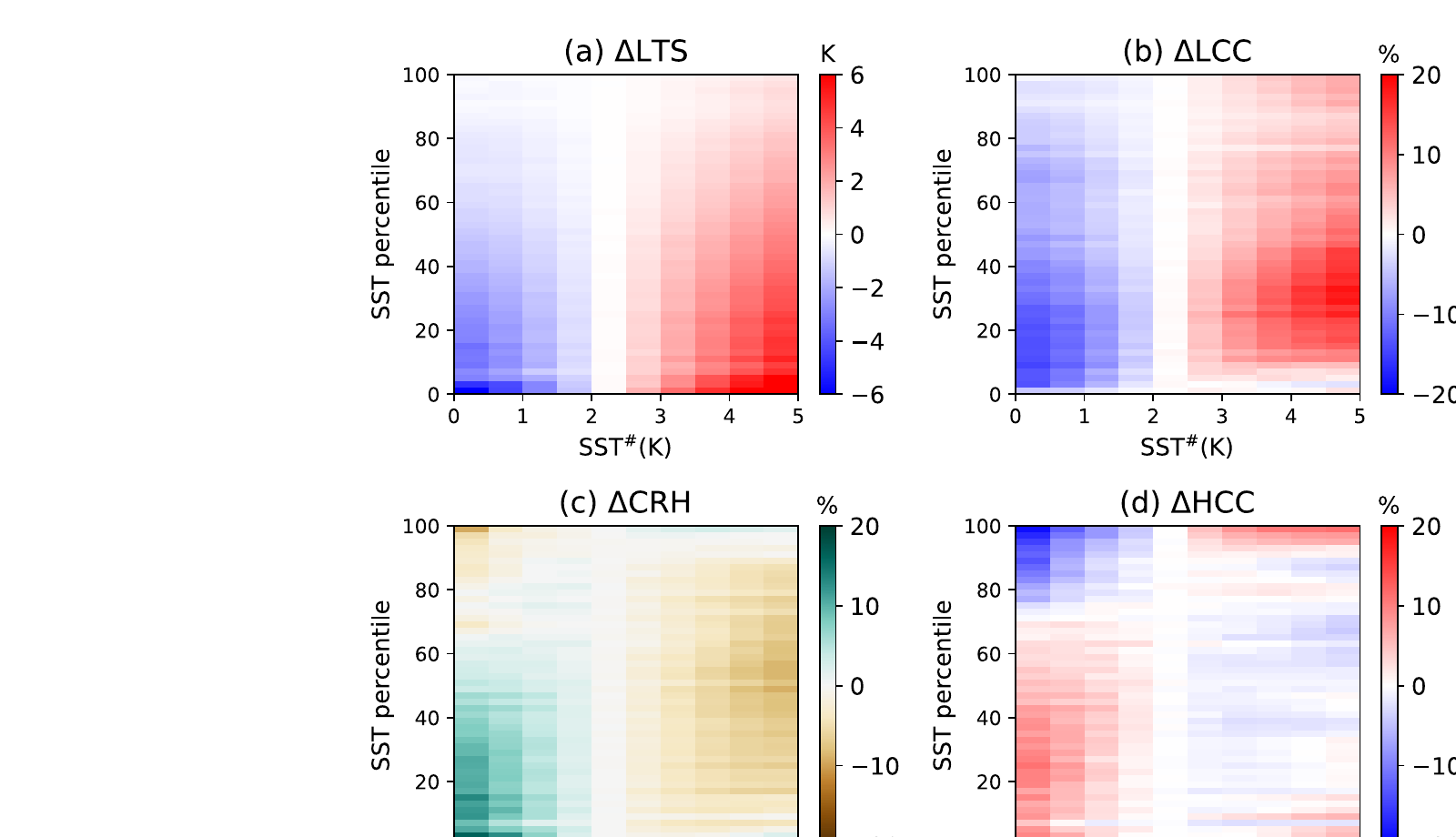
  • Diagnostics of OLR, shortwave cloud effect, lower-tropospheric stability, humidity, and high cloud cover.
  • CMIP6 comparison to assess intermodel spread in shortwave-versus-longwave pattern-effect contributions.

Key Findings

  • A stronger zonal SST gradient contracts deep convection and increases OLR via reduced high-cloud humidity shielding.
  • Longwave pattern effects can offset or complement shortwave cloud responses depending on aggregation state.
  • Convective-organization pathways are central to tropical radiative pattern-effect dynamics.

Figures from the Study

From Quan et al. (2025), https://doi.org/10.1029/2024GL112756.