Bosong Zhang

Forcing and Feedback • Radiative Feedbacks

Journal of Climate (2023)

Using a Green’s Function Approach to Diagnose the Pattern Effect in GFDL AM4 and CM4

Green’s-function reconstruction in AM4/CM4 captures major large-scale pattern-effect feedback signatures while exposing tropical regions where linearity breaks down.
AM4 + CM4 SST Pattern Effect Green's Function DOI: 10.1175/JCLI-D-22-0024.1
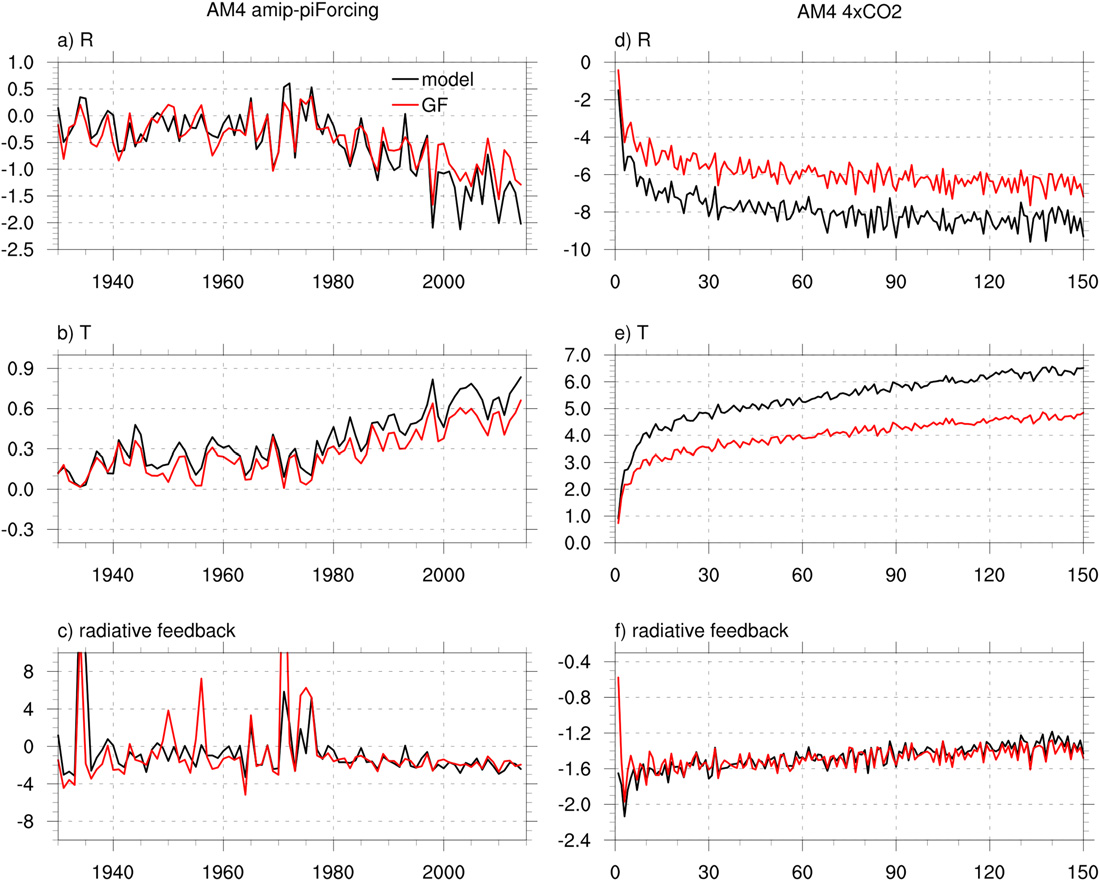
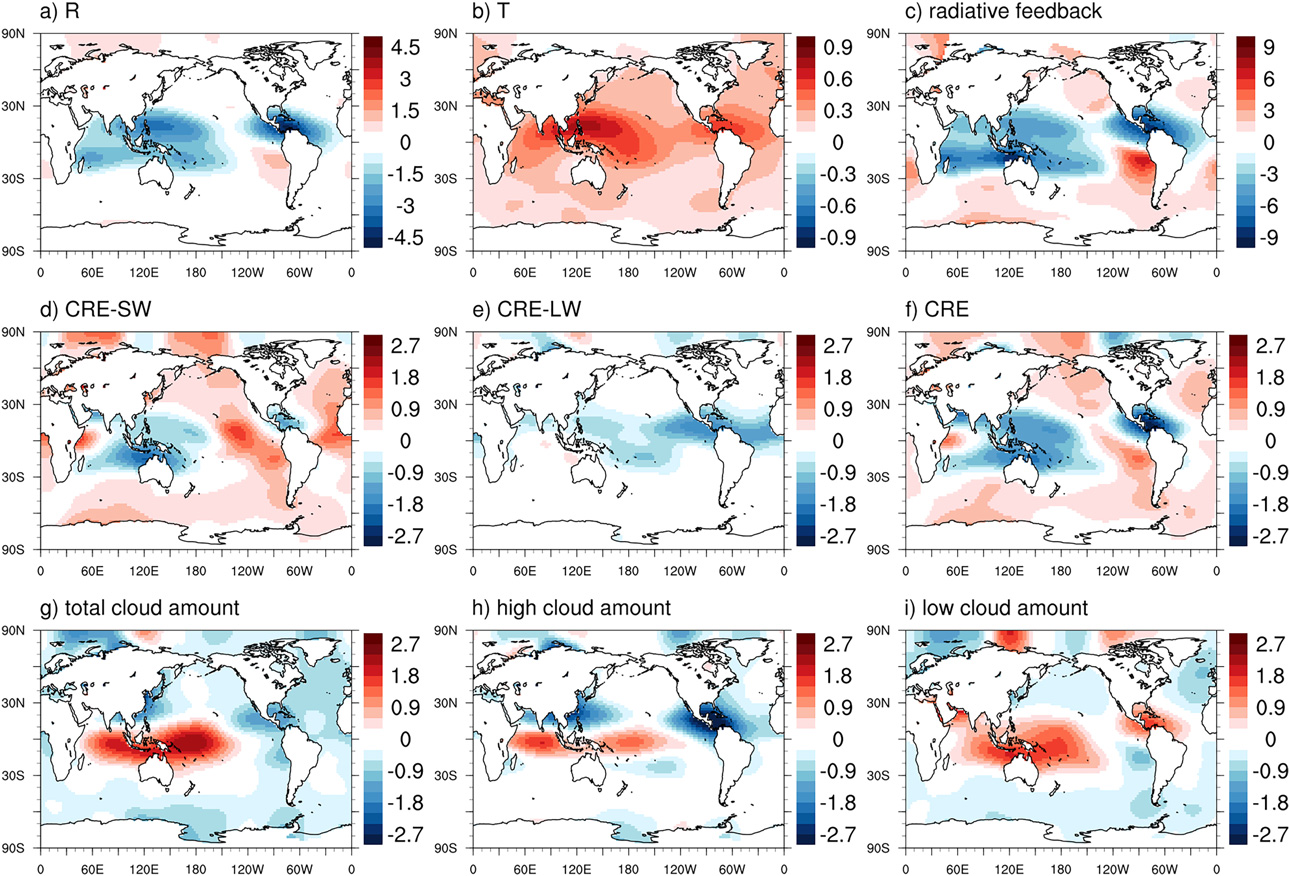
Figure 1 from Zhang et al. 2023 showing Green's function spatial response patterns
Figure 1: spatial Green's function sensitivity patterns for net radiation, temperature, feedback, and cloud-related diagnostics.

Pattern Effect Quantified

Regional SST anomalies can be linearly mapped to global-mean feedback variability with substantial skill in AM4.

Global vs Regional Skill

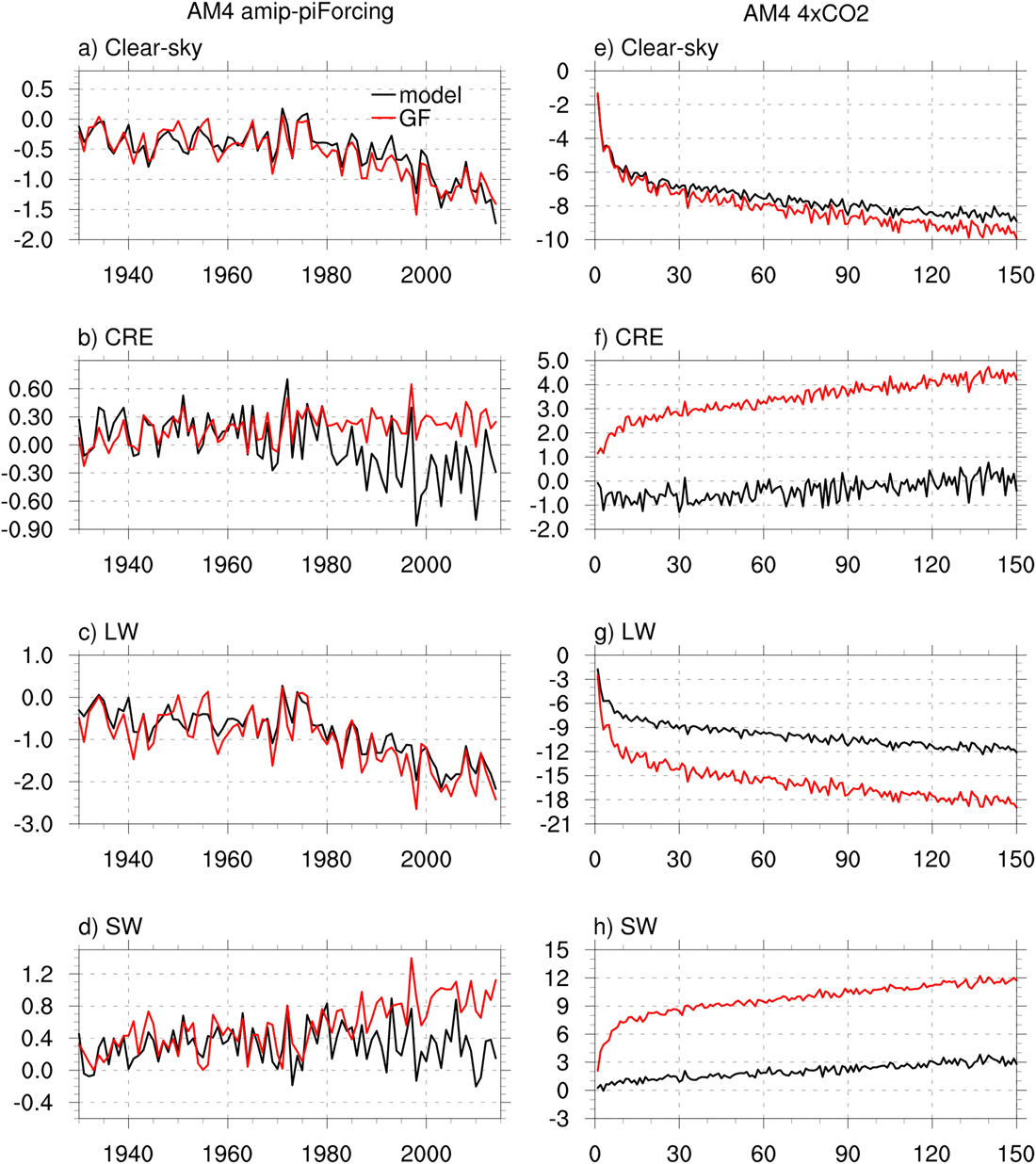
Interannual variability is captured better than absolute magnitude, especially for cloud-radiative components.

Method Sensitivity Matters

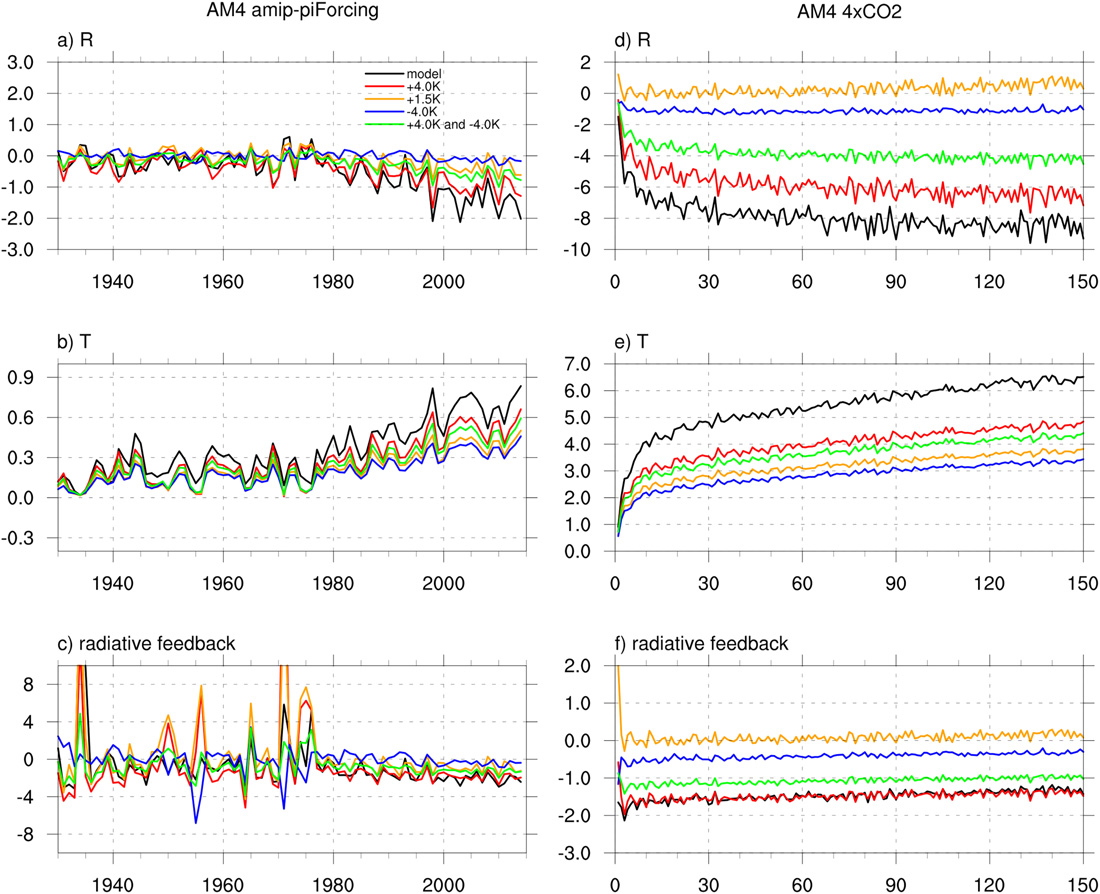
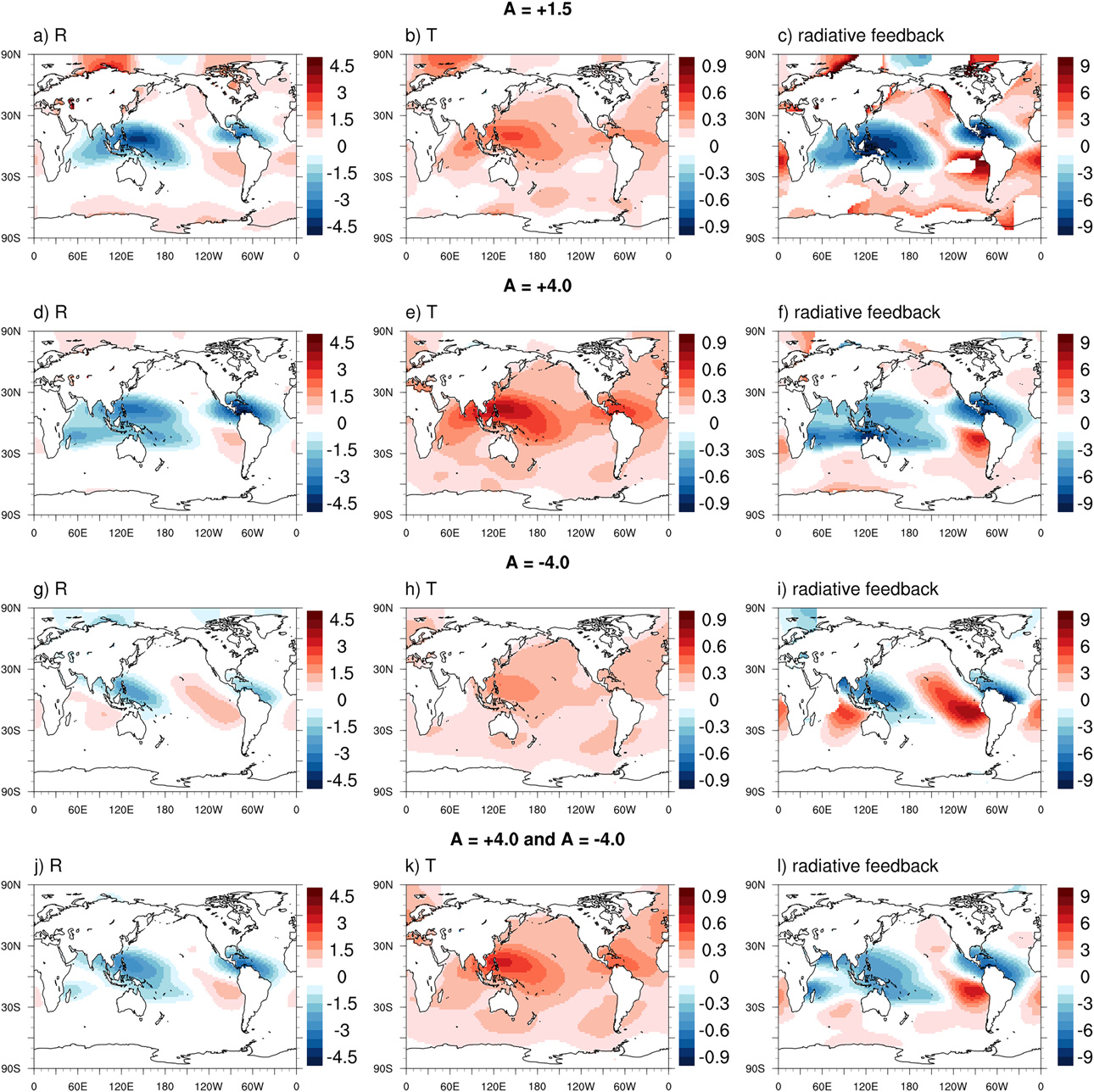
GF performance depends on perturbation amplitude, sign, integration length, and significance threshold choices.

Paper Citation

Zhang, B., M. Zhao, and Z. Tan, 2023: Using a Green’s Function Approach to Diagnose the Pattern Effect in GFDL AM4 and CM4. Journal of Climate, 36, 1105-1124. https://doi.org/10.1175/JCLI-D-22-0024.1

Scientific Logic

  • Question: How accurately can a Green’s-function framework reproduce pattern-effect radiative feedbacks in AM4/CM4?
  • Method: Regional SST-patch perturbations used to build GF operators and reconstruct global/local responses under realistic SST-change patterns.
  • Mechanism: Regional SST anomalies imprint distinct cloud and circulation responses that are approximately linear at broad scales but nonlinear in key tropical regimes.
  • Main Findings: GF reconstructions capture major large-scale feedback structure and provide interpretable regional attribution, while highlighting tropical nonlinear error hotspots.

Key Findings

  • GF operators reproduce key global-mean radiative-feedback responses to patterned SST change.
  • Regional attribution clarifies which SST anomaly locations dominate global response.
  • Largest reconstruction errors coincide with nonlinear tropical cloud-convection adjustments.

Scientific Objective

Diagnose and attribute the SST pattern effect by estimating how SST anomalies at each ocean grid point contribute to global and local climate responses in AM4 and CM4 frameworks.

Approach

  • Build Jacobian-based Green’s functions from idealized SST patch perturbation experiments.
  • Reconstruct responses to historical-like and abrupt 4xCO2 SST patterns.
  • Evaluate sensitivity to perturbation amplitude/sign, integration duration, and significance filters.

Core Findings

  • GF reproduces much of AM4 global-mean and regional interannual response variability.
  • Magnitude biases are largest in CRE and shortwave/longwave cloud-mediated components.
  • Decomposing SST into global-mean warming plus anomalies reduces reconstruction biases.
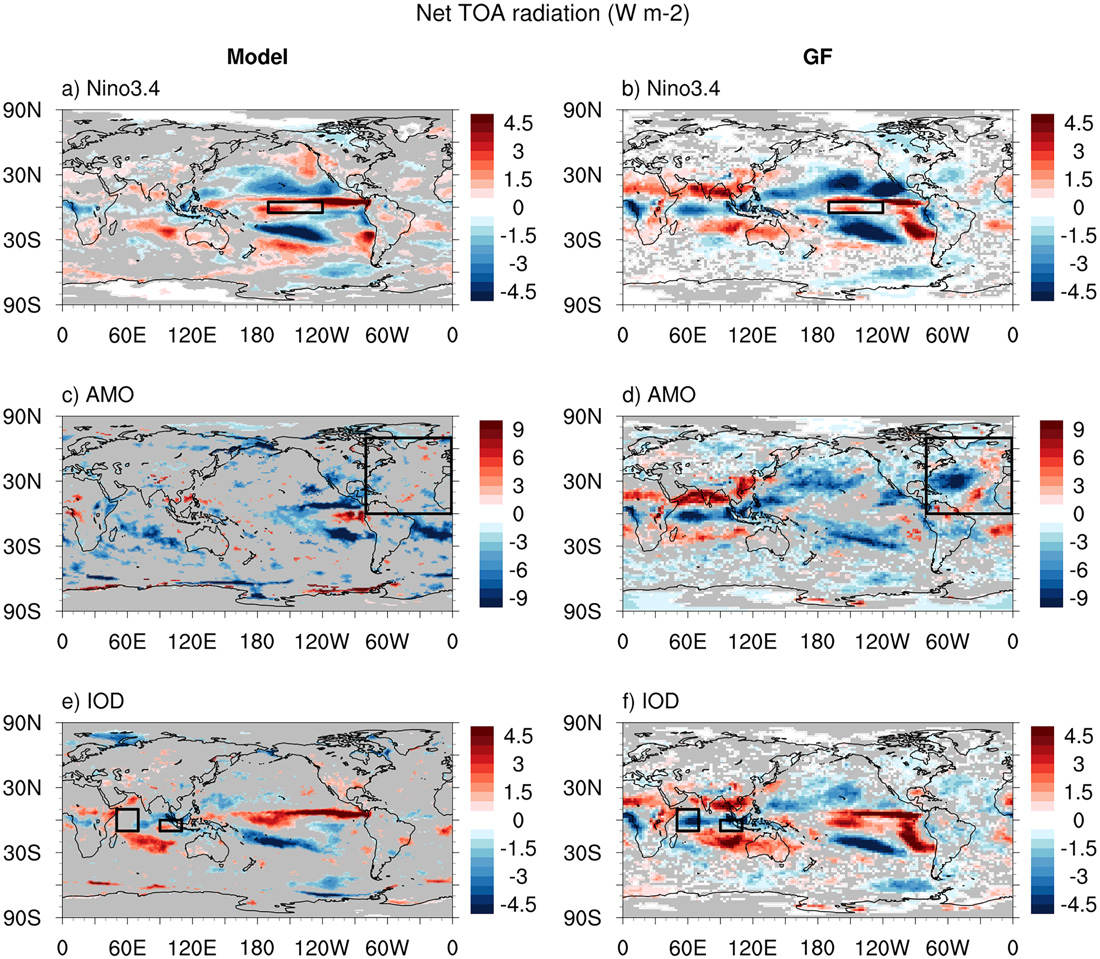
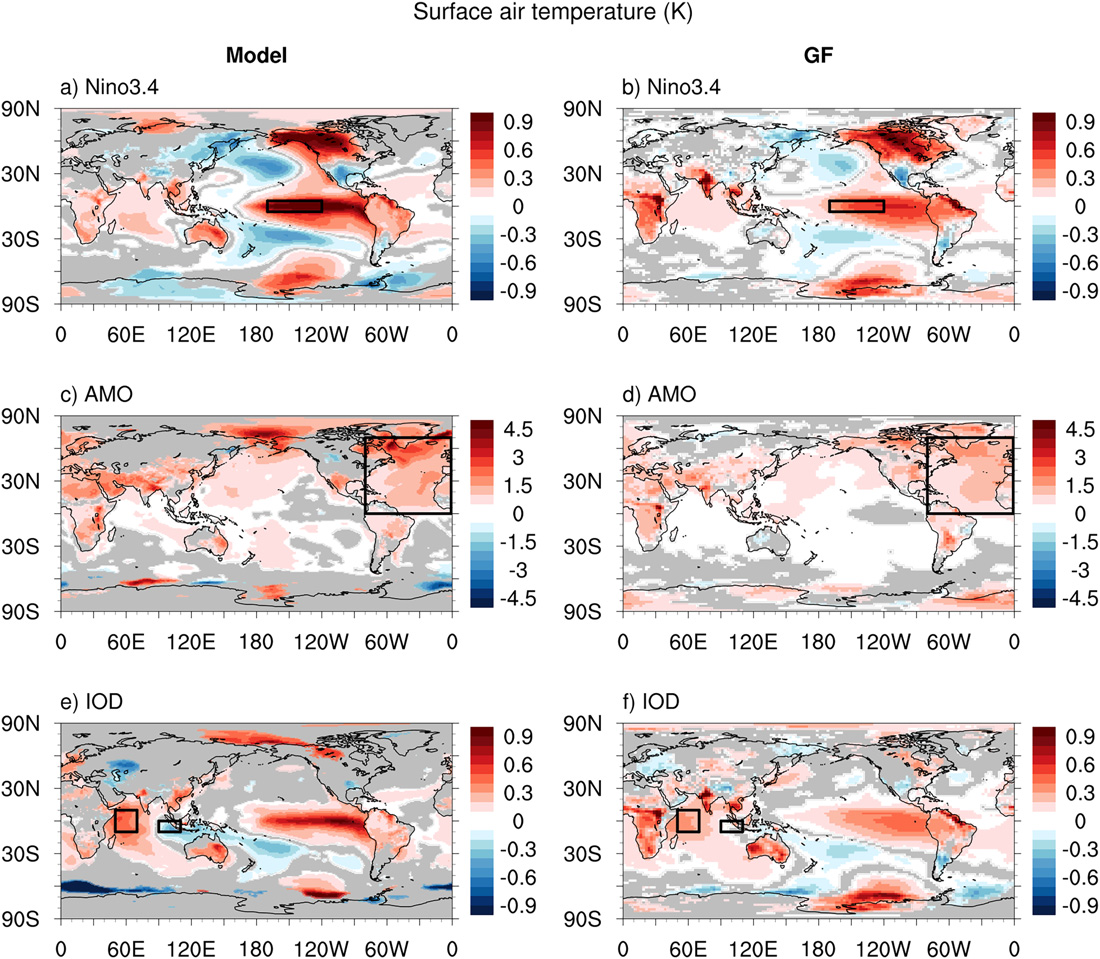
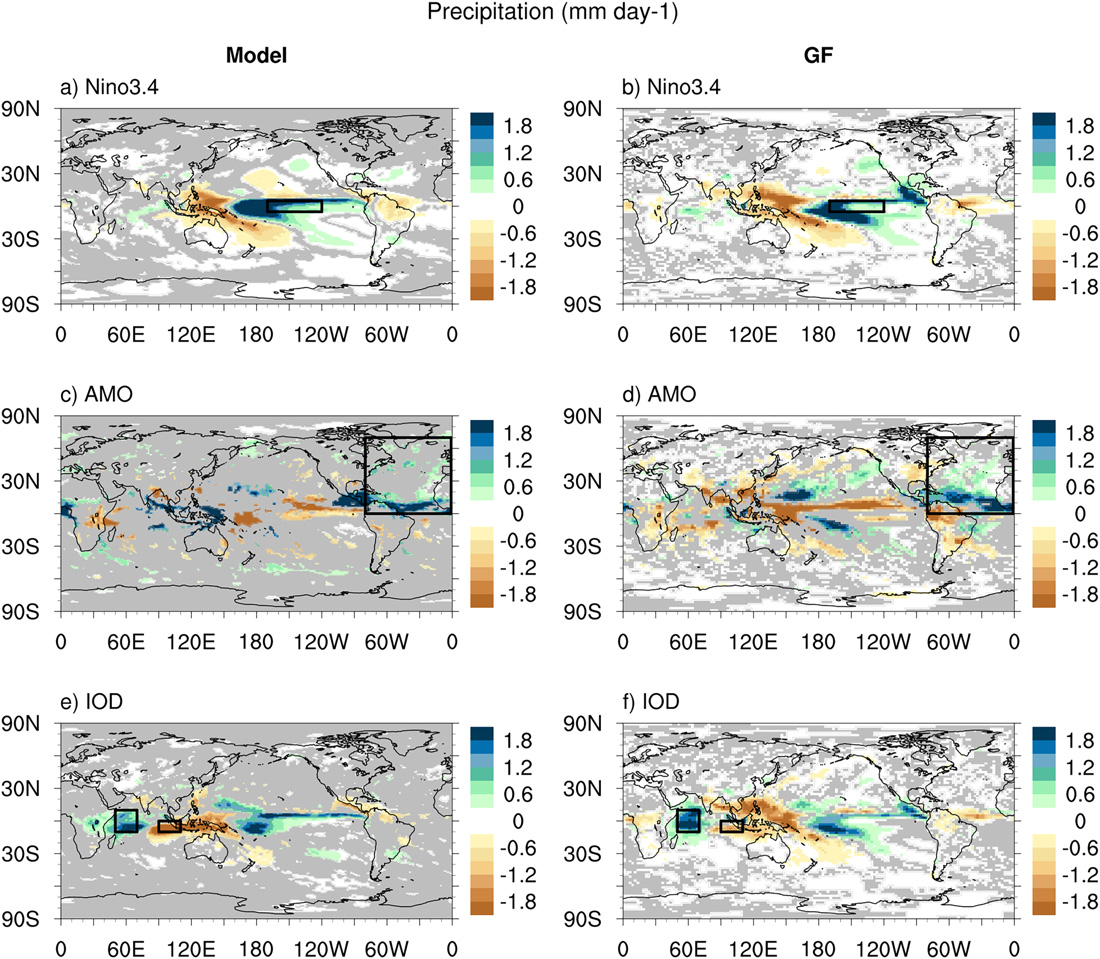
  • Regional diagnostics (Nino3.4, AMO, IOD) show where GF skill is robust and where nonlinearity remains.

AM4 Reconstruction Diagnostics

Figures from Zhang et al. (2023), JCLI-D-22-0024.1.

Regional Pattern-Effect Evaluation

Model-vs-GF regional comparisons for Nino3.4, AMO, and IOD SST patterns.

Pattern-Amplitude Dependence