Bosong Zhang

Journal of Climate (2021)

The Role of Radiative Interactions in Tropical Cyclone Development under Realistic Boundary Conditions

TC-permitting mechanism-denial experiments show that synoptic radiative interactions are required for realistic pre-TC development and global TC frequency under observed-like forcing.

TC-Permitting GCM Mechanism-Denial Experiments Moist Static Energy Budget

Lower TC Count

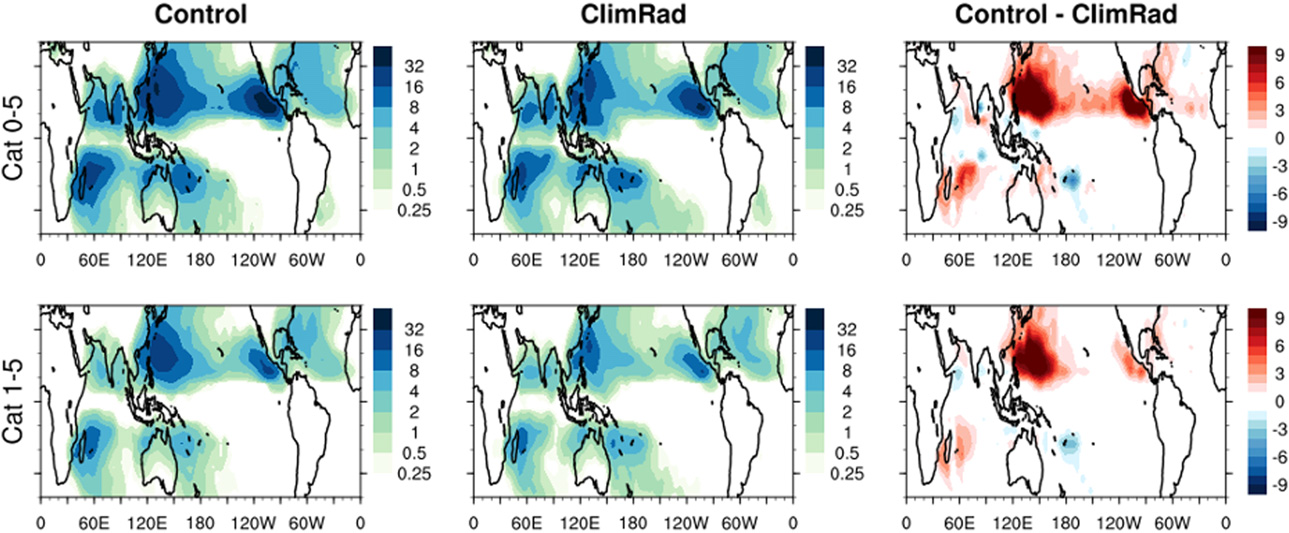
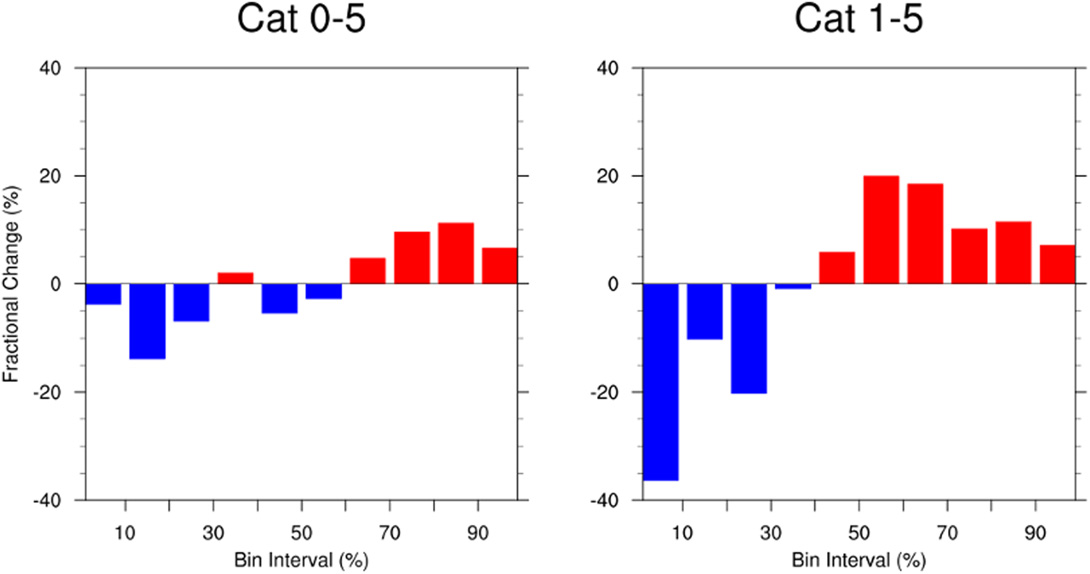
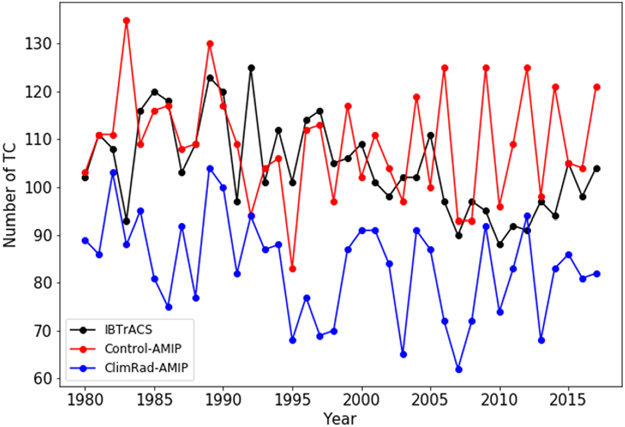
Suppressing synoptic-scale radiative interactions reduces global TC frequency.

Coastal Shift

Genesis locations shift and storm lifetimes shorten in ClimRad-style experiments.

Warming Dependence

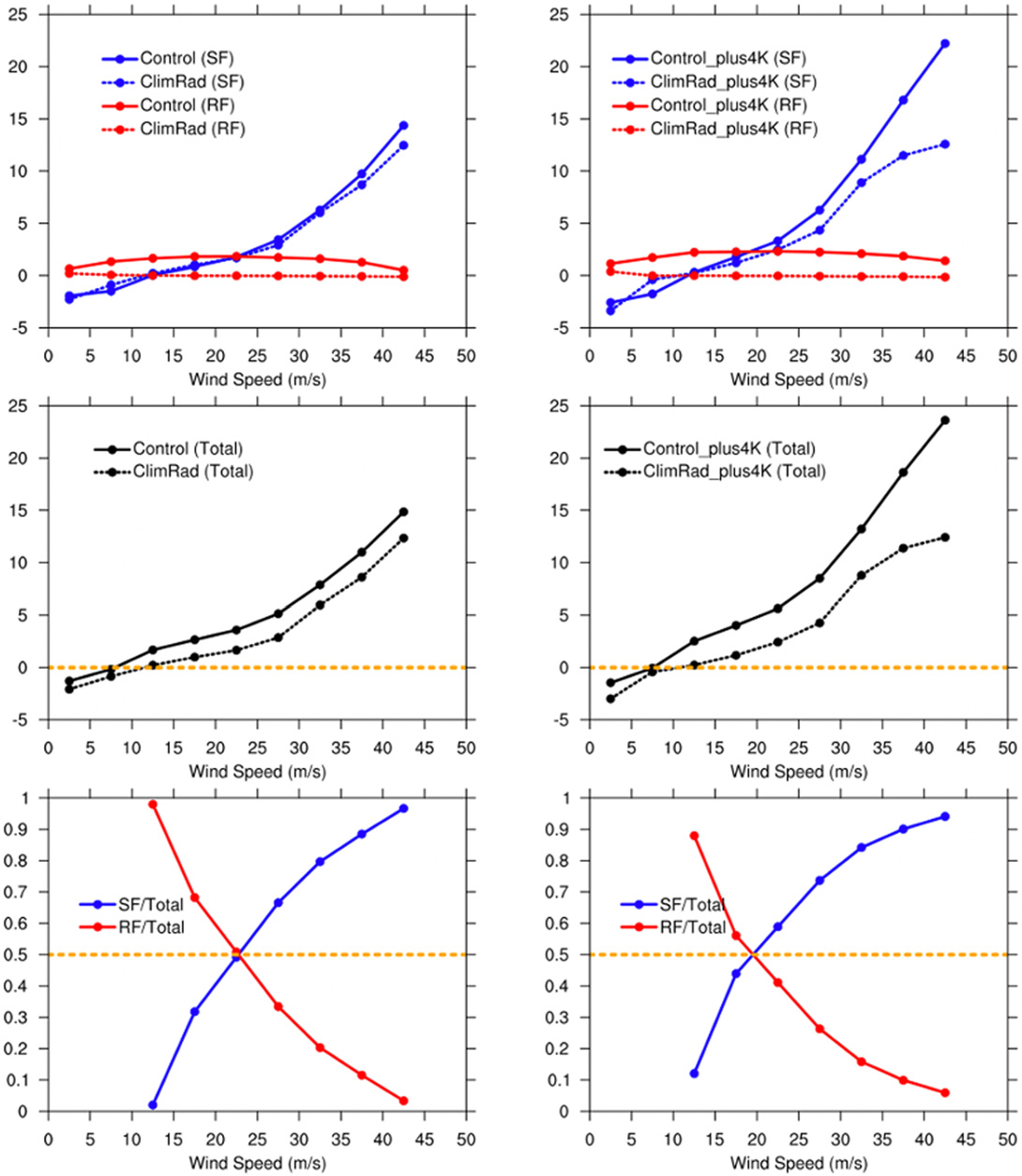
Radiative-control sensitivity weakens as latent-heating influence grows in warmer climates.

Paper Citation

Zhang, B., B. J. Soden, G. A. Vecchi, and W. Yang, 2021: The Role of Radiative Interactions in Tropical Cyclone Development under Realistic Boundary Conditions. Journal of Climate, 34, 2079-2091. https://doi.org/10.1175/JCLI-D-20-0574.1

Scientific Logic

  • Question: Are synoptic-scale radiative interactions necessary for realistic tropical cyclone development with observed-like boundary forcing?
  • Method: Global TC-permitting GCM experiments that suppress synoptic radiative-cooling anomalies via climatological overwriting.
  • Mechanism: Radiative feedbacks amplify pre-TC moist-static-energy variance and support transition from precursor disturbances to developing storms.
  • Main Findings: Removing synoptic radiative interactions significantly reduces global TC frequency primarily by decreasing successful pre-TC development events.

Scientific Question

How strongly do synoptic-scale radiative interactions contribute to tropical cyclone development and frequency under realistic boundary conditions, and how does that role change with warming?

Experimental Design

  • Global TC-permitting model simulations with and without radiative interactions.
  • Mechanism-denial experiments to isolate boundary-layer and free-tropospheric radiative effects.
  • Diagnostics based on storm statistics, track density, and moist static energy variance budgets.

Key Findings

  • Suppressing synoptic radiative anomalies significantly reduces global TC counts.
  • The dominant pathway is fewer precursor disturbances successfully transitioning into TCs.
  • Radiative feedbacks amplify moist-static-energy variance that supports genesis and early intensification.

Figures from the Study

Extracted from Zhang et al. (2021, Journal of Climate, https://doi.org/10.1175/JCLI-D-20-0574.1).